Commercial Roofing Irvine: 7 Essential Things Every Business Owner Must Know
When it comes to commercial roofing Irvine businesses face a unique set of challenges — from intense summer heat and UV exposure to strict building codes that govern every installation and repair. Your roof is one of the largest investments protecting your property, your inventory, and your employees. Choosing the right contractor and understanding your options can save you tens of thousands of dollars over the life of your building.
Why Commercial Roofing Irvine Properties Demand a Specialized Approach
Commercial roofing in Irvine is not the same as residential work. The scale, materials, and code requirements are entirely different, and the stakes are much higher when a business is operating beneath the roof every day.
Irvine’s climate brings prolonged UV exposure, dry heat, and occasional heavy rain events that can stress flat and low-slope roofing systems in ways that pitched residential roofs simply don’t experience. A commercial roofer needs to understand how these conditions affect membrane integrity, drainage performance, and insulation value over time.
Building owners in Irvine also deal with the City of Irvine’s permitting requirements and California Title 24 energy compliance standards. Any commercial roofing project — whether a full replacement or a significant repair — typically requires permits and inspections. Working with a contractor who knows these local requirements protects you from costly delays and failed inspections.
Practical tip: Before signing any contract, confirm your contractor is licensed with the California Contractors State License Board (CSLB) and carries both general liability and workers’ compensation insurance.
Common Commercial Roofing Systems Used in Irvine
Not every roofing system is right for every building. The best choice depends on your roof slope, building use, budget, and energy goals. Here are the systems most commonly installed on commercial properties across Irvine:
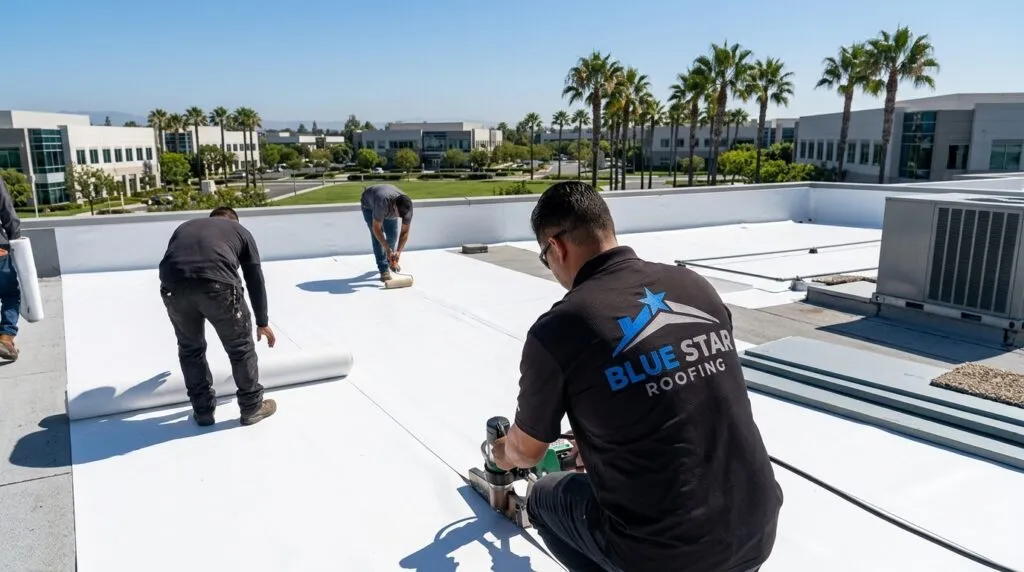
- TPO (Thermoplastic Polyolefin): A single-ply white membrane that reflects heat and meets California’s cool roof requirements. It’s one of the most popular choices for business roofing in Irvine because of its energy efficiency and relatively low installed cost.
- EPDM (Ethylene Propylene Diene Monomer): A durable rubber membrane well-suited for flat roofs. It handles temperature swings well and has a long track record in commercial applications.
- Modified Bitumen: A multi-layer asphalt-based system that offers excellent waterproofing. Often used on buildings that need a more robust solution for foot traffic or rooftop equipment.
- Built-Up Roofing (BUR): Multiple layers of bitumen and reinforcing fabric topped with gravel or a cap sheet. Proven over decades and still used on many older commercial buildings.
- Metal Roofing: Increasingly popular for commercial and industrial buildings due to its longevity, low maintenance, and modern appearance.
Energy efficiency is a major factor in Southern California. The ENERGY STAR program certifies roofing products that meet strict reflectivity and emittance standards — a useful reference when comparing membrane options for your building.
Practical tip: For most flat-roof commercial buildings in Irvine, TPO or EPDM will deliver the best combination of performance, energy savings, and long-term value.
How to Choose the Right System for Your Commercial Roofing Irvine Project
Selecting the right system starts with a professional roof assessment. A qualified contractor will evaluate your existing deck condition, drainage layout, insulation R-value, and any rooftop equipment penetrations before recommending a system.
For commercial roofing Irvine projects, energy compliance is non-negotiable. California’s Title 24 Building Energy Efficiency Standards require that most commercial re-roofing projects use cool roof products that meet minimum solar reflectance and thermal emittance values. The California Energy Commission publishes the current standards and approved product lists — your contractor should be referencing these before any proposal is written.
If your building has rooftop HVAC units, solar panels, or skylights, those penetrations need to be properly flashed and integrated into the new system. Cutting corners here is one of the most common causes of leaks in commercial buildings.
Warning Signs Your Commercial Roof Needs Immediate Attention
Many business owners don’t think about their roof until water is dripping onto the floor. By that point, the damage is often far more extensive — and expensive — than it would have been with earlier intervention.
Watch for these warning signs that your commercial roofing system needs professional evaluation:
- Interior water stains or active leaks — Even a small stain on a ceiling tile can indicate significant membrane failure or flashing damage above.
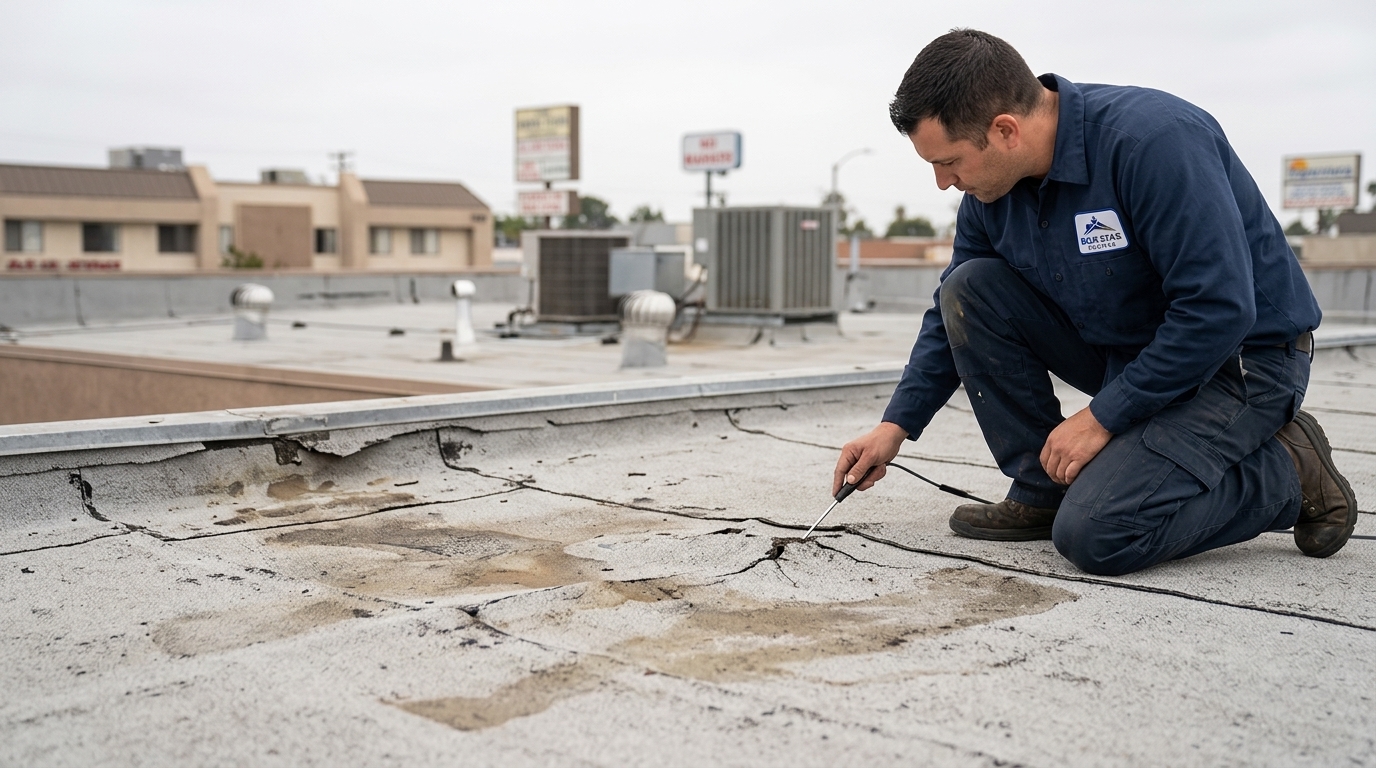
- Blistering or bubbling on the membrane surface — This indicates moisture trapped beneath the membrane, which will accelerate deterioration.
- Ponding water — Water that sits on a flat roof for more than 48 hours after rain is a drainage problem that shortens roof life dramatically.
- Visible cracks or splits in the membrane — UV exposure in Irvine’s climate can cause older membranes to become brittle and crack.
- Increased energy bills — A failing roof with compromised insulation forces your HVAC system to work harder, which shows up in your utility costs.
If you’re seeing any of these signs, don’t wait. Reach out to schedule a free commercial roof inspection with Blue Star Roofing before a manageable repair becomes a full replacement.
Practical tip: Walk your roof — or have someone do it — at least twice a year: once before summer and once after the rainy season. Early detection is the single most cost-effective maintenance strategy available.
What Does Commercial Roofing Irvine Installation or Replacement Cost?
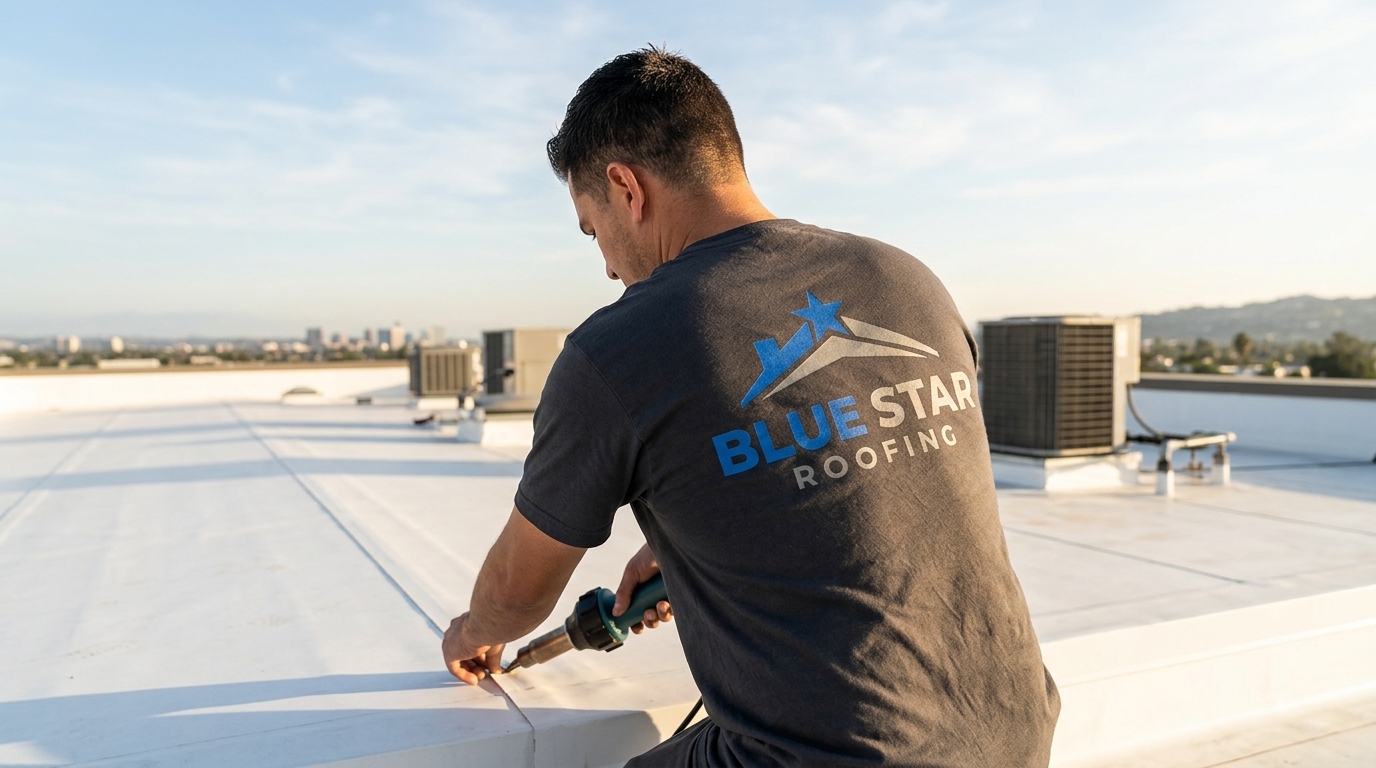
Cost is always a top concern for business owners, and commercial roofing Irvine pricing varies widely based on several factors. Understanding what drives cost helps you evaluate proposals and avoid being oversold.
Key cost factors include:
- Roof size and complexity: Larger roofs cost more in total, but the per-square-foot price often decreases at scale. Roofs with many penetrations, multiple levels, or unusual geometry cost more to install correctly.
- System type: TPO and EPDM are generally the most affordable single-ply options. Modified bitumen and metal roofing carry higher material costs but offer longer service lives.
- Tear-off vs. overlay: If your existing roof can support an overlay, you may save on tear-off and disposal costs. However, California code limits the number of roof layers allowed, and a proper assessment is needed before this decision is made.
- Insulation upgrades: Title 24 compliance may require upgrading your insulation R-value during a re-roof, which adds cost but also reduces long-term energy expenses.
- Contractor experience and warranty: A lower bid from an inexperienced contractor often costs more in the long run. Look for contractors who offer manufacturer-backed warranties, not just workmanship guarantees.
As a general reference, commercial roofing in Irvine typically runs between $8 and $20 per square foot installed, depending on the system and conditions. Get at least three written proposals before committing.
Practical tip: Ask each contractor to break out labor, materials, disposal, and permit costs separately. A detailed proposal is a sign of a professional operation — and makes it much easier to compare bids accurately.
Maintenance Plans That Extend the Life of Your Commercial Roof
A well-maintained commercial roof in Irvine can last 20 to 30 years. A neglected one may fail in half that time. Preventive maintenance is the most cost-effective investment a building owner can make after the initial installation.
A solid commercial roof maintenance plan should include:
- Bi-annual professional inspections (spring and fall)
- Clearing of drains, scuppers, and gutters before and after the rainy season
- Inspection and re-sealing of all penetration flashings around HVAC units, vents, and skylights
- Membrane surface inspection for cracks, blisters, or seam separation
- Documentation of all findings and repairs for warranty compliance
Many commercial roofing contractors offer annual maintenance agreements that cover all of the above at a fixed cost. For business owners managing multiple properties, these agreements provide predictable budgeting and ensure nothing gets overlooked.
Blue Star Roofing works with commercial property owners across Irvine to keep their roofing systems performing at their best. Visit the Blue Star Roofing homepage to learn more about our commercial services and maintenance programs.
Practical tip: Keep a maintenance log for your roof. Documenting every inspection, repair, and material change is often required to keep manufacturer warranties valid — and it’s invaluable if you ever sell the property.
How to Choose the Right Commercial Roofing Contractor in Irvine
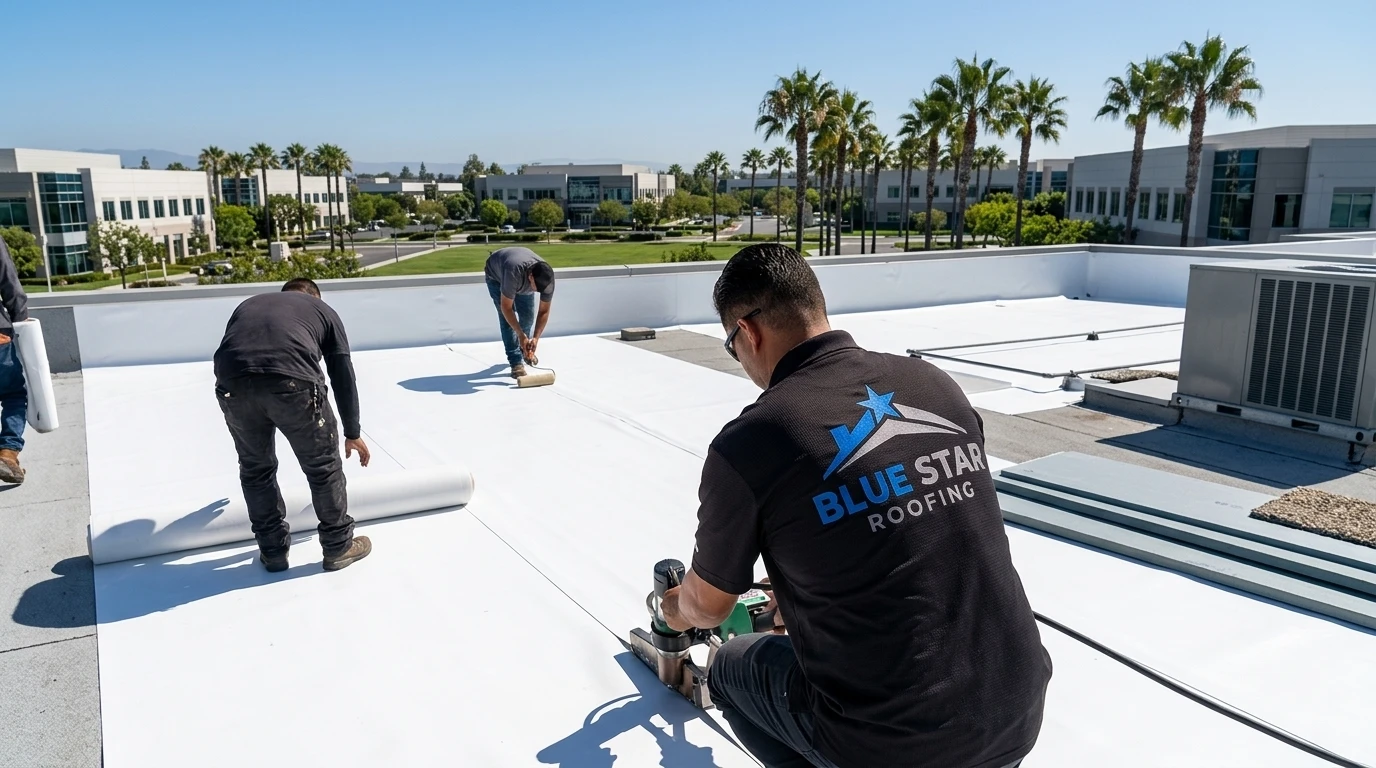
The contractor you hire matters as much as the system you choose. Commercial roofing Irvine projects require a contractor with specific experience, proper licensing, and a track record on buildings similar to yours.
Here’s what to look for when vetting a commercial roofer in Irvine:
- CSLB License: Verify the contractor’s license number at the California Contractors State License Board website. A valid Class C-39 roofing license is required for roofing work in California.
- Commercial experience: Ask specifically about their experience with your roof type — flat, low-slope, or metal. Residential experience does not automatically translate to commercial competence.
- Manufacturer certifications: Certified installers from manufacturers like Carlisle, GAF, or Firestone can offer extended warranty coverage that uncertified contractors cannot.
- Local references: Ask for references from commercial clients in Irvine or the surrounding area. A contractor with a strong local reputation is easier to hold accountable.
- Written proposals and contracts: Everything — scope of work, materials, timeline, warranty terms, and payment schedule — should be in writing before any work begins.
Blue Star Roofing brings all of these qualities to every commercial project. If you’re ready to get started, request a free commercial roofing estimate and one of our project managers will be in touch within one business day.
Practical tip: Never pay more than 10–15% upfront on a commercial roofing project. A reputable contractor has the financial stability to begin work without requiring a large deposit.
Your roof is one of the most critical components of your commercial property, and getting it right requires the right partner. Commercial roofing Irvine projects demand local expertise, proper licensing, energy code knowledge, and a commitment to quality that goes beyond the lowest bid. Whether you need a full replacement, targeted repairs, or a proactive maintenance plan, Blue Star Roofing has the experience and the credentials to protect your investment for decades to come. Don’t wait for a leak to take action — proactive roof management is always less expensive than emergency repairs.
Contact Blue Star Roofing today for a free commercial roof inspection and honest, no-pressure assessment of your property.
Frequently Asked Questions
How long does commercial roofing Irvine installation typically take?
The timeline for commercial roofing Irvine projects depends on the size of the building, the system being installed, and weather conditions. A small to mid-size commercial roof (10,000–25,000 sq ft) typically takes between three and seven business days for a full replacement. Larger or more complex projects may take two to four weeks. Your contractor should provide a detailed schedule before work begins.
What is the best roofing system for a flat commercial roof in Irvine?
For most flat commercial roofs in Irvine, TPO is the top choice because it meets California’s cool roof requirements, reflects UV heat effectively, and offers a strong cost-to-performance ratio. EPDM is also a solid option for buildings where budget is the primary concern. The right answer depends on your specific building conditions, so a professional assessment is always the best starting point.
Does commercial roofing Irvine work require a permit?
Yes, most commercial roofing Irvine projects — including full replacements and significant repairs — require a permit from the City of Irvine Building Division. California’s Title 24 energy compliance standards also apply to re-roofing projects. A licensed contractor will handle the permitting process on your behalf and ensure all inspections are completed correctly.
How often should I have my commercial roof inspected?
Most roofing professionals recommend at least two inspections per year — once in the spring before summer heat arrives and once in the fall before the rainy season. In addition, you should schedule an inspection after any major storm event. Regular inspections catch small issues before they become expensive repairs and are often required to keep manufacturer warranties active.
Can I get commercial roofing Irvine repairs done without replacing the entire roof?
Absolutely. Many commercial roofing Irvine issues — including localized membrane damage, flashing failures, and minor ponding water problems — can be resolved with targeted repairs rather than a full replacement. A professional inspection will determine whether repair or replacement is the more cost-effective path. Blue Star Roofing provides honest assessments with no pressure to replace when a repair will do the job.