The Most Important Questions to Ask Your Roofer Before Hiring
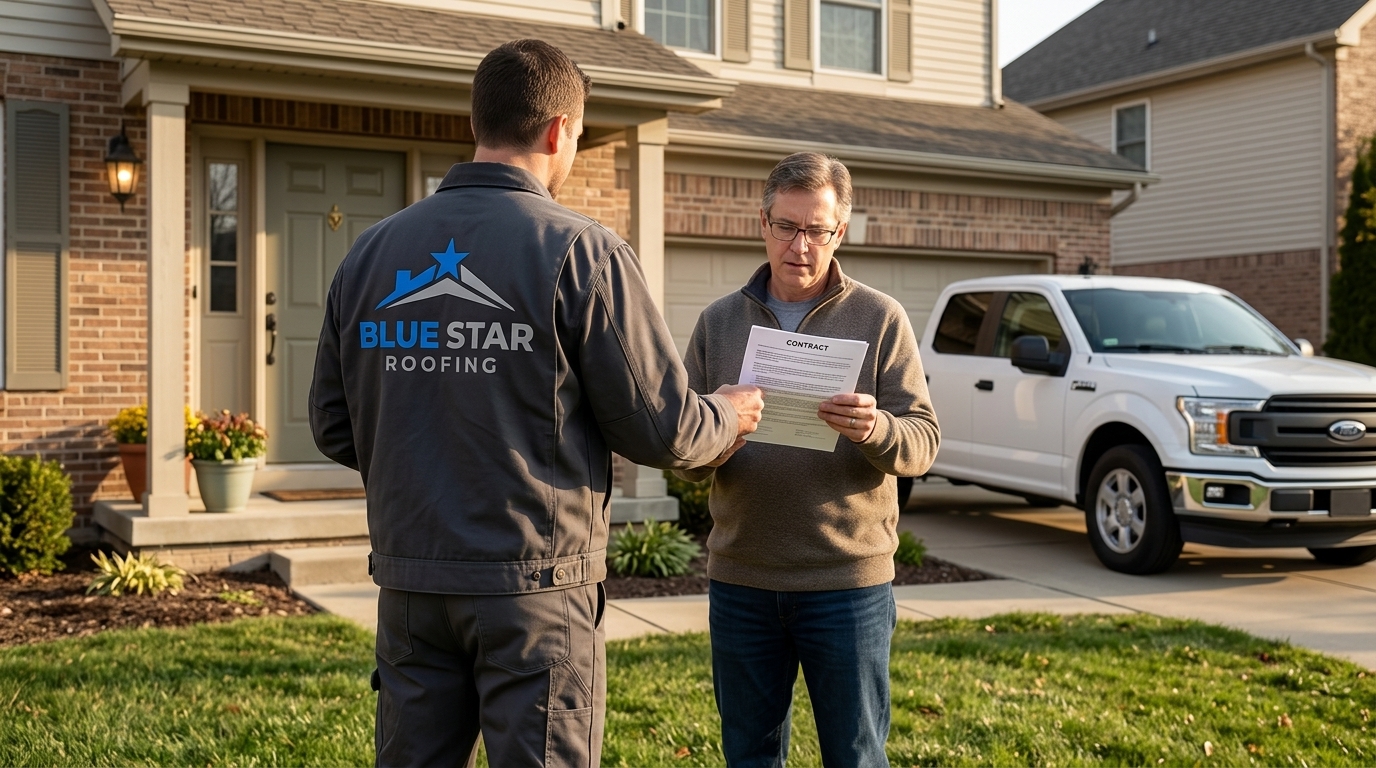
Knowing the right questions to ask a roofer before hiring can be the difference between a smooth project and a costly nightmare. Roofing is one of the largest investments a homeowner makes, and not every contractor operates with the same level of professionalism or transparency. This guide walks you through the most important roofing contractor interview questions so you can hire with confidence.
Why the Questions You Ask a Roofer Matter More Than You Think
Most homeowners focus on price when comparing roofing bids. That is understandable, but price alone tells you very little about the quality of work you will actually receive. The questions you ask a roofer reveal far more — about their experience, their business practices, and whether they will still be reachable six months after the job is done.
A contractor who hesitates, gives vague answers, or pressures you to skip the conversation is a red flag. Reputable roofers welcome informed homeowners because it sets clear expectations on both sides.
Practical tip: Write your questions down before the estimate appointment. Contractors who see a prepared homeowner tend to give more thorough, honest answers.
What Happens If You Skip the Questions Ask Roofer Checklist
Skipping the questions ask roofer checklist is how homeowners end up with unlicensed crews, voided manufacturer warranties, and surprise charges after the job is complete. Without asking upfront, you have no documented basis to hold a contractor accountable if something goes wrong.
Even a single overlooked question — like whether the old roofing material will be fully removed before installation — can lead to structural problems down the road. Taking 15 minutes to ask the right questions before signing protects you for the lifetime of the roof.
Are You Licensed, Insured, and Locally Established?
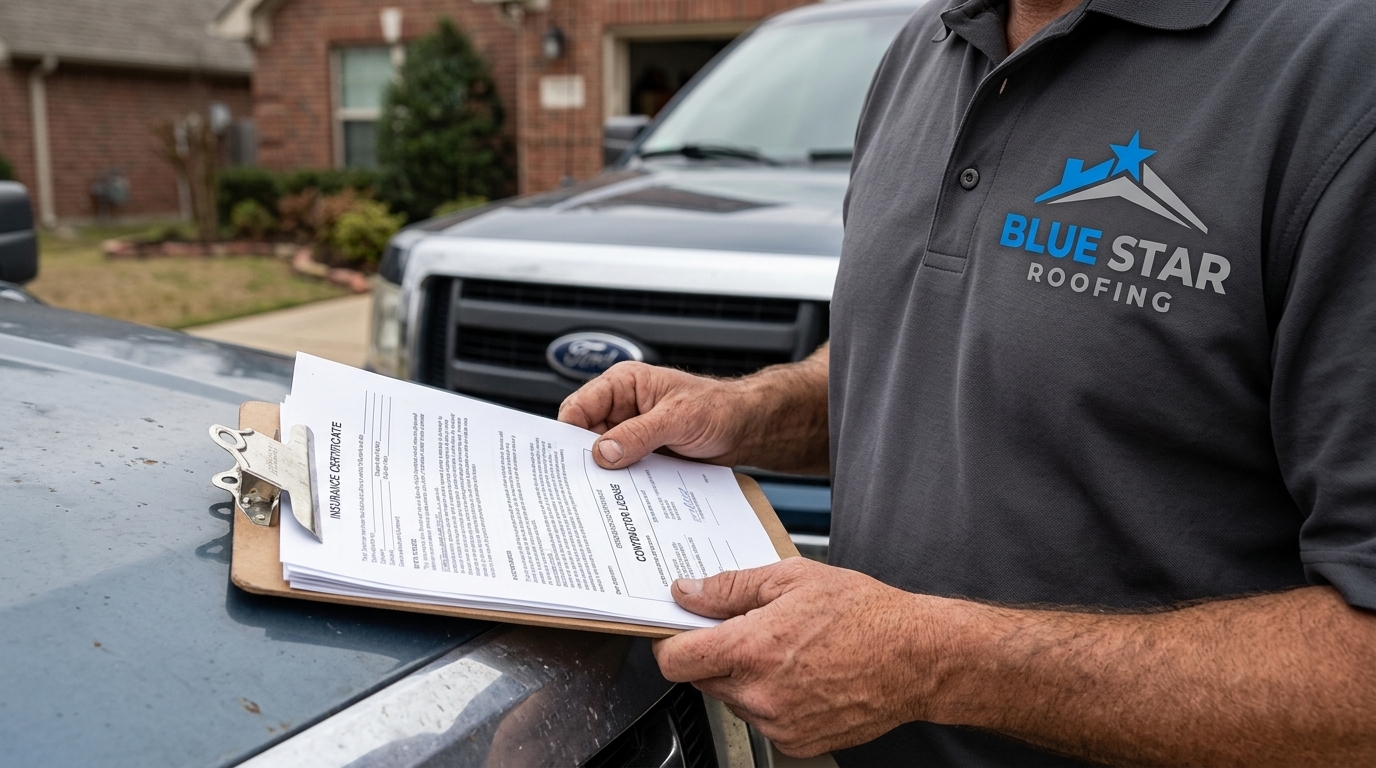
This is the first thing to verify before any other roofing contractor interview questions come into play. A valid contractor’s license confirms the roofer has met your state’s minimum competency and legal requirements. General liability insurance protects your property if something is damaged during the job. Workers’ compensation coverage protects you from liability if a crew member is injured on your roof.
Always ask for certificates of insurance — not just verbal confirmation — and verify they are current. A legitimate contractor will provide these without hesitation.
Local establishment matters too. A company with a physical address and a track record in your area is far less likely to disappear after taking your deposit than an out-of-town crew chasing storm work.
Practical tip: Call the insurance provider listed on the certificate to confirm the policy is active before work begins.
What Does Your Roofing Estimate Actually Include?
A low bid is only a good deal if it covers everything the job requires. One of the most important questions before hiring a roofer is understanding exactly what is — and is not — included in the written estimate.
- Ask specifically about:
- Full tear-off of existing shingles versus layover installation
- Replacement of damaged decking or underlayment
- Flashing around chimneys, skylights, and vents
- Disposal of old roofing materials
- Cleanup and final inspection
A detailed written estimate protects both parties. If a contractor only provides a verbal quote or a single-line total, that is a warning sign worth taking seriously.
Practical tip: Request a line-item breakdown so you can compare bids on an equal basis — not just on the bottom-line number.
What Roofing Materials Do You Recommend and Why?
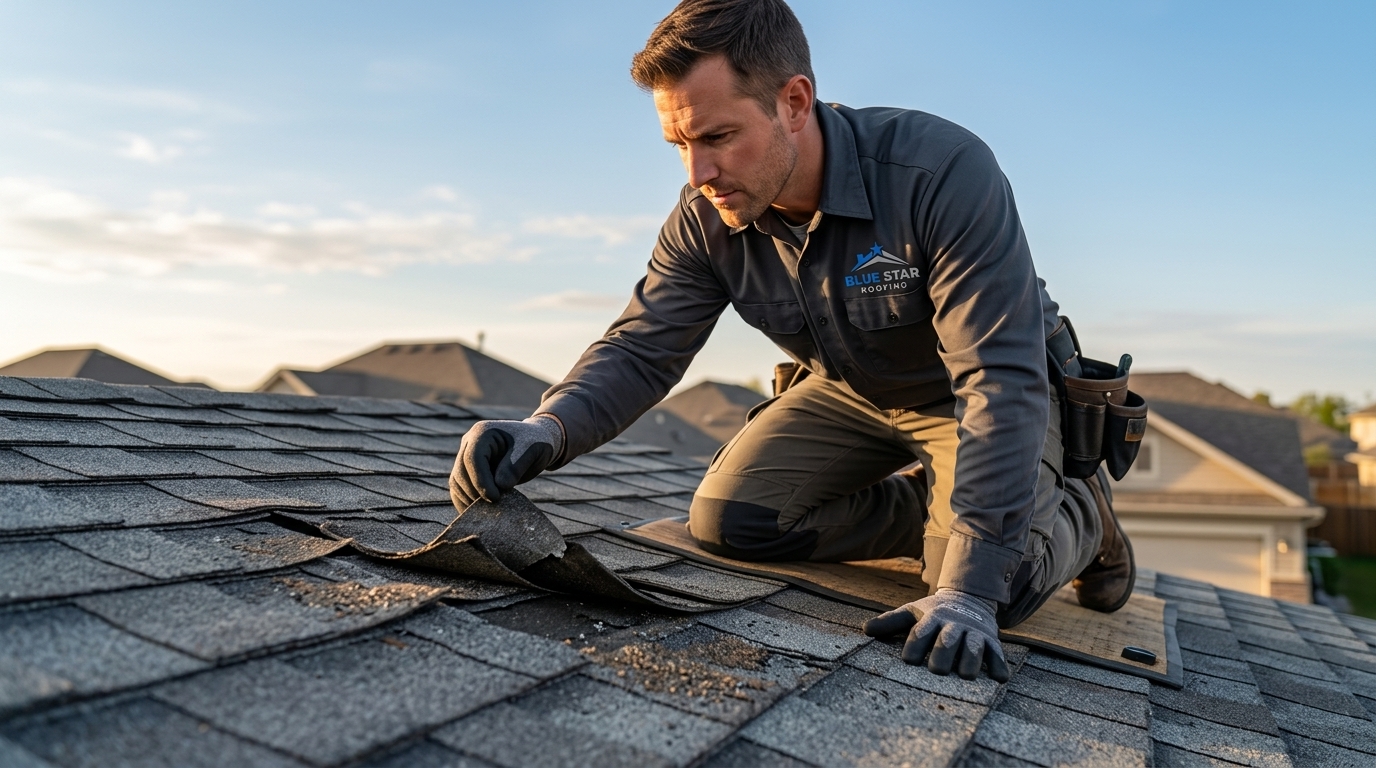
A knowledgeable roofer should be able to explain material options clearly and tailor their recommendation to your home’s specific needs — not just push whatever they have in stock. Among the most useful roofing contractor interview questions is asking why a contractor recommends a particular shingle brand, weight, or style.
- Ask about:
- Manufacturer warranties and what voids them
- Energy efficiency ratings for your climate
- Impact resistance if you live in a hail-prone area
- How the material choice affects long-term maintenance
If a contractor cannot explain the difference between a 3-tab shingle and an architectural shingle, or why one product suits your roof pitch better than another, that is a gap in expertise worth noting.
Practical tip: Ask whether the contractor is a certified installer for the brand they recommend. Certified installers can often offer extended manufacturer warranties that non-certified crews cannot.
Who Will Actually Be on My Roof — and Are They Your Employees?
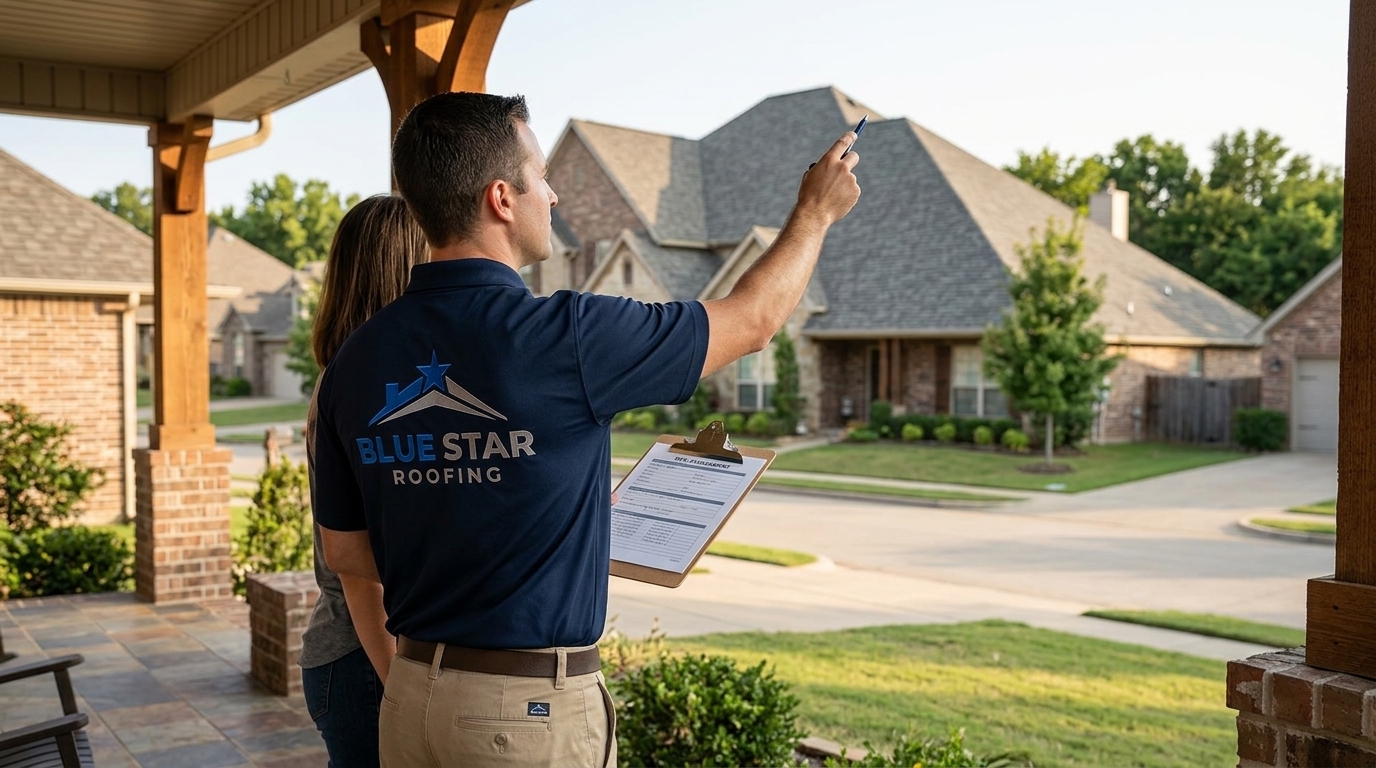
Many roofing companies subcontract their labor, which is not automatically a problem — but it is something you need to know upfront. When you ask questions before hiring a roofer, find out whether the crew showing up is employed directly by the company or hired through a third party.
Subcontracted crews may not carry the same insurance coverage as the primary contractor. They may also have less accountability to the company’s quality standards. Ask who supervises the work on-site and whether the project manager will be present during installation.
Practical tip: Request the name of the crew lead or site supervisor before work begins. Knowing who is in charge on the day of installation gives you a direct point of contact if any issues arise.
What Warranties Cover This Roof — and What Voids Them?
Warranties are one of the most misunderstood parts of any roofing project. There are typically two types: the manufacturer’s material warranty and the contractor’s workmanship warranty. Both matter, and both have conditions that can void them if the installation is not done correctly.
Among the questions to ask a roofer, this one has the longest financial impact. A manufacturer’s warranty can range from 20 years to a lifetime, but it is only valid if the product is installed by a qualified contractor following the manufacturer’s specifications. A workmanship warranty covers installation errors and typically ranges from one to ten years depending on the contractor.
Ask for both warranties in writing before signing the contract. Verbal assurances are not enforceable.
Practical tip: Read the warranty exclusions carefully. Common voids include improper ventilation, layover installation, and using non-approved underlayment products.
Can You Provide References and Proof of Past Work?
Any established roofing contractor should be able to provide references from recent local jobs without hesitation. This is one of the simplest questions before hiring a roofer, yet many homeowners skip it entirely.
Ask for at least three references from projects completed in the past 12 months. When you follow up with those homeowners, ask about communication, timeline, cleanup, and whether they would hire the contractor again. Online reviews are helpful, but direct references give you a more complete picture.
Also ask if you can see photos of completed projects similar to your own — same roof style, similar scope of work. A contractor with a strong portfolio is far more likely to deliver consistent results.
Practical tip: If a contractor cannot provide a single local reference, treat that as a serious red flag regardless of how competitive their pricing is.
Hiring a roofer without asking the right questions is one of the most avoidable mistakes a homeowner can make. The questions ask roofer candidates to answer before you sign are not about being difficult — they are about protecting a major investment in your home. From licensing and insurance to warranties and crew accountability, every question on this list serves a real purpose. A contractor who welcomes your questions is almost always a contractor worth trusting. Blue Star Roofing encourages every homeowner to come prepared, ask everything on this list, and never feel rushed into a decision.
Ready to get straight answers from a contractor you can trust? Reach out to Blue Star Roofing for a transparent, no-pressure roofing estimate.
Frequently Asked Questions
What are the most important questions to ask a roofer before signing a contract?
The most critical questions ask roofer candidates to answer upfront include: Are you licensed and insured? What does the estimate include? Who will be on my roof? What warranties apply? And can you provide local references? Getting clear, written answers to each of these before signing protects you legally and financially.
How do roofing contractor interview questions help me avoid scams?
Roofing contractor interview questions expose red flags that a price comparison alone never will. Unlicensed contractors, storm chasers, and low-quality crews often struggle to answer basic questions about insurance, warranties, and crew supervision. A contractor who deflects, rushes you, or cannot provide documentation is one you should walk away from.
What questions before hiring a roofer should I ask about the timeline?
Ask for a written project start date and estimated completion window. Also ask what happens if materials are delayed or weather causes a postponement. Questions before hiring a roofer about scheduling help you plan around the disruption and hold the contractor accountable to a realistic timeline.
Is it normal to ask a roofer for proof of insurance before work starts?
Absolutely — it is not just normal, it is essential. Any reputable contractor will provide a certificate of insurance without hesitation. You should verify that both general liability and workers’ compensation coverage are active before a single crew member steps onto your property.
How many questions ask roofer candidates should I prepare before the estimate?
Aim for at least seven to ten focused questions ask roofer candidates to answer during the estimate appointment. Cover licensing, insurance, materials, crew, warranties, timeline, and references. A prepared homeowner gets better answers and signals to the contractor that quality and accountability matter to you.