Flat Roof Repair in Anaheim: What You Need to Know Before Calling a Contractor
When your flat roof Anaheim property shows signs of leaking or surface damage, acting quickly is the difference between a minor repair and a full replacement. Flat roofs are common across Anaheim’s commercial buildings, apartment complexes, and modern homes — and they come with their own set of vulnerabilities. Understanding what causes problems and what your repair options look like will help you make a smarter, faster decision.
Why Flat Roofs in Anaheim Face Unique Challenges
Anaheim’s climate is deceptively tough on flat roofing systems. While the region doesn’t get heavy snowfall, the intense UV exposure, seasonal Santa Ana winds, and occasional heavy rain events create a cycle of stress that breaks down roofing materials faster than most homeowners expect.
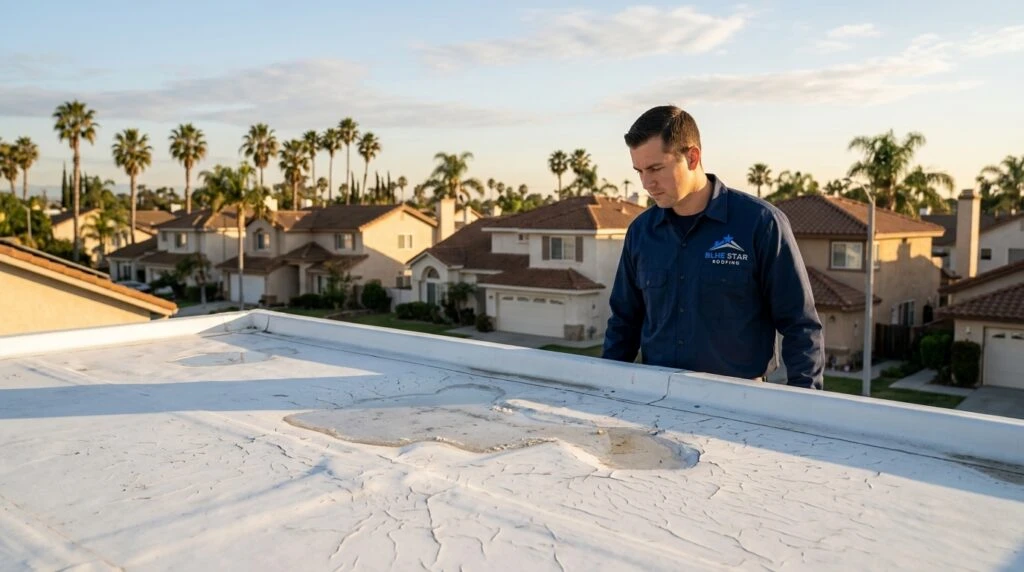
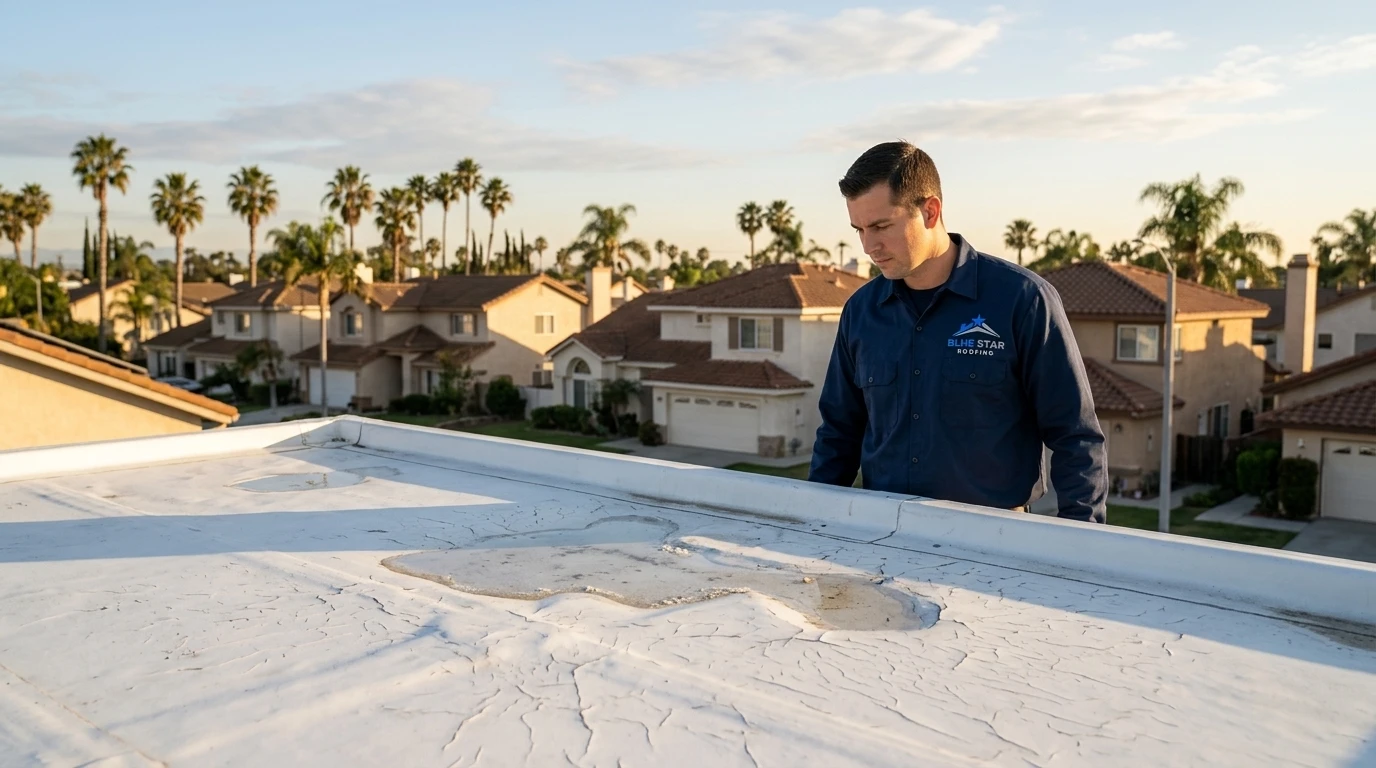
Flat roofs lack the natural drainage slope that pitched roofs rely on. That means water can pool on the surface — a condition called ponding — which accelerates membrane deterioration and increases the risk of leaks penetrating into the structure below.
The heat alone is a major factor. Anaheim summers regularly push surface temperatures on dark-membrane roofs well above 150°F. Over time, that thermal cycling causes materials to expand and contract, loosening seams and creating entry points for moisture.
Practical tip: After any significant rainstorm, walk the perimeter of your building and look for water stains on interior ceilings or walls near the roofline. Early detection is the cheapest form of flat roof maintenance.
Common Flat Roof Anaheim Repair Issues and What Causes Them
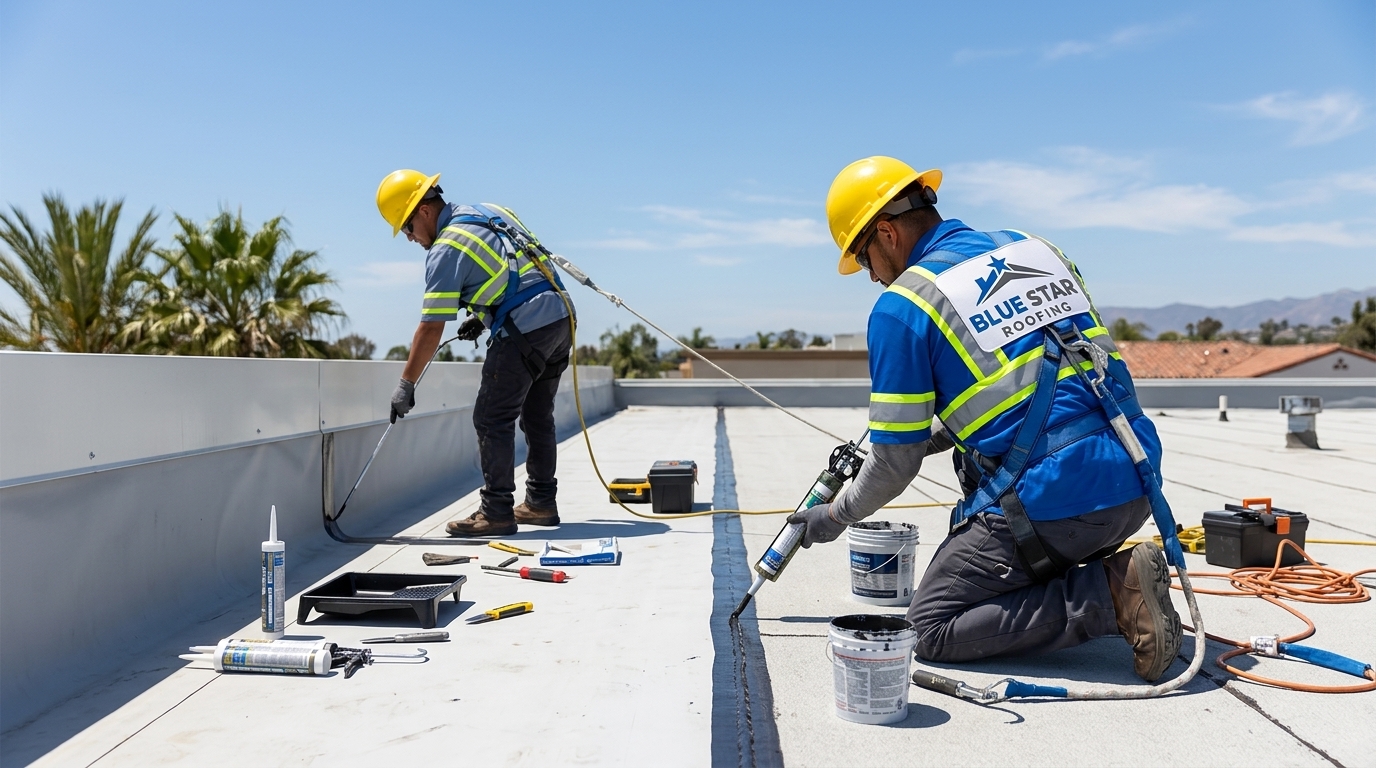
Most flat roof Anaheim repair calls fall into a handful of recurring categories. Knowing which problem you’re dealing with helps you have a more informed conversation with your contractor and avoid being oversold on work you don’t need.
Blistering and bubbling occur when moisture or air gets trapped beneath the membrane during installation or over time. These bubbles weaken the surface and eventually crack open, letting water in.
Seam failures are one of the most common issues on TPO and EPDM roofs. The seams where membrane sheets are joined are the most vulnerable points on any flat roof. Heat, UV exposure, and foot traffic all contribute to seam separation.
Flashing deterioration around vents, HVAC units, skylights, and parapet walls is another frequent culprit. Flashing is the metal or membrane material that seals transitions between the roof surface and vertical elements — and it’s often the first thing to fail.
Ponding water damage develops when drains become clogged or the roof surface has settled unevenly. Standing water that remains for more than 48 hours after rain is a warning sign that needs immediate attention.
Practical tip: Clear your roof drains and scuppers at least twice a year — once before the rainy season and once after. A clogged drain is the single most preventable cause of flat roof water damage.
How to Tell If Your Flat Roof Anaheim Needs Repair or Full Replacement
This is the question every property owner dreads, but the answer usually comes down to two factors: the age of the roof and the extent of the damage.
If your flat roof Anaheim system is under 10 years old and the damage is isolated — a failed seam, a cracked flashing, or a single blister — repair is almost always the right call. Targeted repairs on a relatively young membrane can extend the roof’s life by several years at a fraction of replacement cost.
If the roof is 15–20 years old and you’re seeing widespread membrane shrinkage, multiple leak points, or significant ponding across large areas, a full replacement is likely the more cost-effective long-term solution. Patching an aging system repeatedly adds up fast.
A qualified roofing contractor should perform a core sample test to check for moisture saturation in the insulation layers beneath the membrane. If the insulation is wet, repairs alone won’t solve the problem — the saturated material needs to be removed and replaced.
TPO and EPDM Roofing Options for Anaheim Properties
When it comes to flat roof systems in Anaheim, two materials dominate the market: TPO (Thermoplastic Polyolefin) and EPDM (Ethylene Propylene Diene Monomer). Both are single-ply membrane systems, but they perform differently and suit different applications.
TPO roofing is the more popular choice for new installations in Southern California. Its white reflective surface deflects solar heat, which directly reduces cooling costs — a meaningful benefit in Anaheim’s hot summers. TPO seams are heat-welded, creating a strong, watertight bond when installed correctly. It’s also resistant to UV degradation, punctures, and chemical exposure.
EPDM roofing is a synthetic rubber membrane that has been used on flat roofs for decades. It’s extremely durable, flexible in cold temperatures, and relatively easy to repair with adhesive patches. EPDM is often the preferred choice for re-roofing projects where budget is a primary concern, as material costs tend to be lower than TPO.
For a TPO EPDM roof Anaheim property owner is choosing between, the decision often comes down to budget, building use, and how much foot traffic the roof receives. TPO holds up better under regular foot traffic; EPDM is more forgiving in terms of repair simplicity.
Practical tip: Ask your contractor to show you the manufacturer’s warranty documentation before work begins. Both TPO and EPDM systems carry manufacturer warranties that are only valid when installed by a certified applicator — always verify that your contractor qualifies.
What the Flat Roof Anaheim Repair Process Actually Looks Like
Understanding the repair process helps you set realistic expectations and spot red flags if a contractor cuts corners.
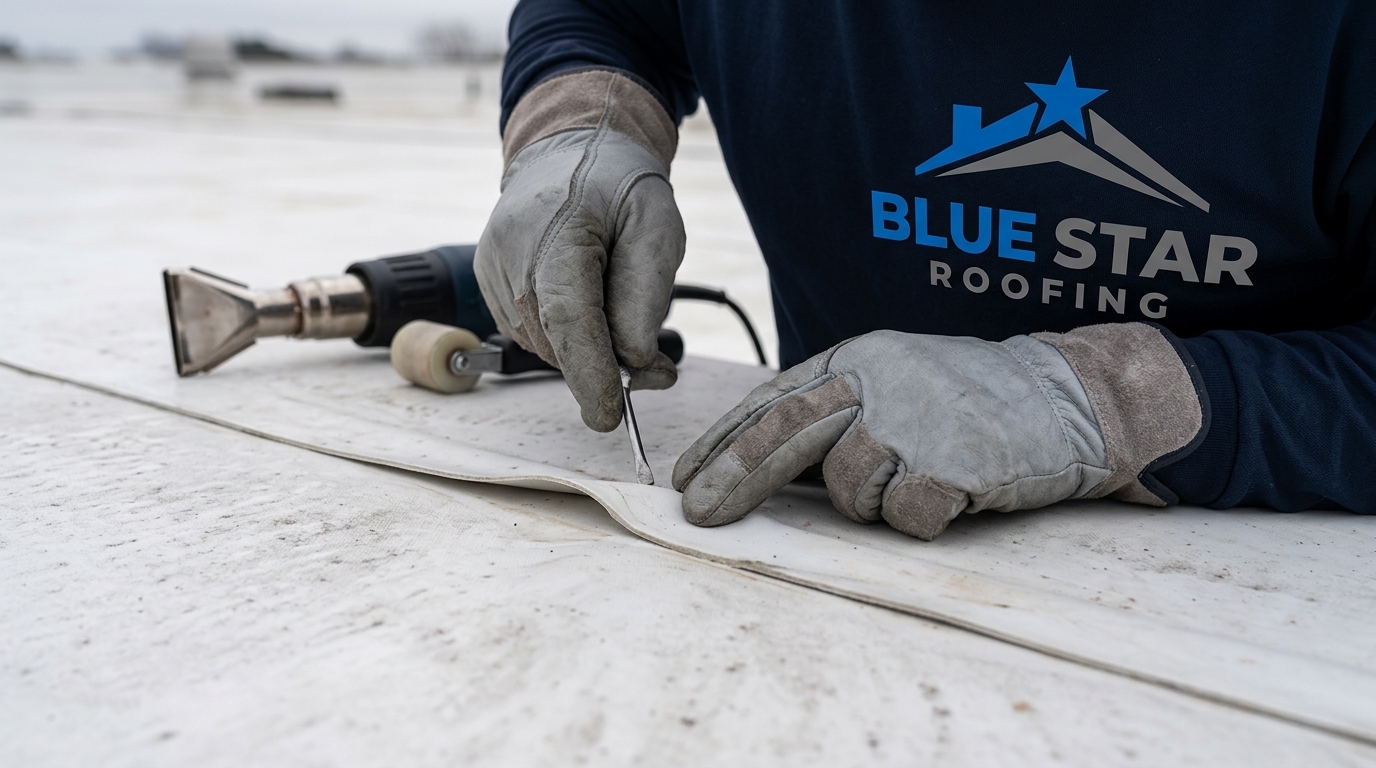
A professional flat roof Anaheim repair typically follows these steps:
- Inspection and assessment — The contractor walks the entire roof surface, checks all seams, flashings, drains, and penetrations, and identifies all damage points. A thorough inspection takes 30–60 minutes depending on roof size.
- Moisture testing — On older roofs or where significant damage is suspected, infrared scanning or core sampling is used to detect moisture trapped in the insulation below the membrane.
- Surface preparation — Damaged areas are cleaned, dried, and prepped. Any blistered or bubbled sections are cut open, dried out, and re-adhered before patching.
- Repair or membrane work — Seams are re-welded or re-adhered, flashings are replaced or resealed, and patches are applied over damaged membrane sections using compatible materials.
- Final inspection and documentation — A reputable contractor will walk the roof with you after the work is complete, explain what was done, and provide written documentation of the repairs.
Practical tip: Never allow a contractor to apply a roof coating over an existing leak without first identifying and fixing the source. Coatings are a maintenance tool, not a repair solution.
How Much Does Flat Roof Repair Cost in Anaheim?
Repair costs vary widely depending on the type of damage, the roofing material, and the size of the affected area. Here’s a general breakdown to help you budget:
- Minor seam repairs or small patches: $300–$800
- Flashing replacement around a single penetration: $400–$900
- Drain repair or replacement: $250–$600
- Large section membrane repair (50–100 sq ft): $800–$2,000
- Full flat roof replacement (per square): $400–$700 per roofing square (100 sq ft)
These are general ranges for the Anaheim area — actual quotes will depend on roof accessibility, material choice, and the contractor’s labor rates.
One thing to watch for: unusually low bids. A contractor quoting significantly below market rate is often cutting corners on materials, skipping moisture testing, or planning to use incompatible patch materials that won’t hold long-term.
Practical tip: Get at least three written quotes for any repair over $1,000. Compare the scope of work described in each proposal — not just the price. The cheapest bid rarely describes the most thorough job.
Why Anaheim Property Owners Trust Blue Star Roofing for Flat Roof Work
Blue Star Roofing has built its reputation in the Anaheim area by doing the work right the first time. That means thorough inspections before any repair begins, honest assessments about whether repair or replacement makes more sense, and using manufacturer-certified materials on every job.
The team at Blue Star Roofing is experienced with all major flat roofing systems — TPO, EPDM, modified bitumen, and built-up roofing — and understands the specific demands that Southern California’s climate places on these systems.
Every flat roof Anaheim project handled by Blue Star Roofing comes with clear written documentation, a detailed scope of work before the job starts, and a walkthrough after completion. No surprises, no upsells, and no disappearing acts after the check clears.
If you’re dealing with a leak, ponding water, or a roof that’s simply past its prime, Blue Star Roofing is ready to give you a straight answer and a fair price.
Practical tip: Schedule your inspection during or immediately after a rain event if possible. Active leaks are far easier to trace to their source than dry-weather inspections, which can miss intermittent problem areas.
A well-maintained flat roof Anaheim property is not something you want to leave to chance. Whether you’re dealing with a stubborn leak, aging membrane, or ponding water that won’t drain, the right contractor will give you an honest assessment and a clear path forward — not a rushed patch job that fails in the next rainstorm. The cost of a proper repair today is almost always a fraction of what deferred maintenance ends up costing down the road. Don’t wait for a small problem to become a structural one.
Contact Blue Star Roofing today for a thorough flat roof inspection and a no-pressure written estimate.
Frequently Asked Questions
How do I know if my flat roof Anaheim property needs repair or a full replacement?
The key factors are the age of the roof and how widespread the damage is. A flat roof Anaheim system under 10 years old with isolated damage — a failed seam or cracked flashing — is usually a strong candidate for repair. If the roof is 15–20 years old and you’re seeing multiple leak points, widespread membrane shrinkage, or saturated insulation, replacement is likely the smarter long-term investment. A professional inspection with moisture testing will give you a definitive answer.
What is the best roofing material for a flat roof in Anaheim’s climate?
TPO is widely considered the best option for new flat roof installations in Southern California due to its reflective surface, UV resistance, and heat-welded seams. EPDM is a solid alternative for re-roofing projects where budget is a priority. Both materials perform well in Anaheim’s climate when installed correctly by a certified contractor. Your choice should also factor in how much foot traffic the roof receives and the building’s specific drainage setup.
How long does a flat roof repair take?
Most standard flat roof repairs — patching a seam, replacing flashing, or fixing a drain — can be completed in a single day. Larger repairs involving significant membrane sections or moisture remediation in the insulation layer may take two to three days. A reputable contractor will give you a clear timeline before work begins and communicate any changes as the job progresses.
Can I repair my flat roof Anaheim leak myself?
Minor temporary patches using compatible roofing tape or sealant can slow an active leak in an emergency, but DIY repairs rarely address the underlying cause. Flat roof systems require proper surface preparation, compatible materials, and in the case of TPO, heat-welding equipment that most homeowners don’t have. Improper repairs can void manufacturer warranties and make the eventual professional repair more complicated and expensive.
How often should a flat roof in Anaheim be inspected?
Twice a year is the standard recommendation — once before the rainy season (typically October) and once in spring after the rains have passed. You should also schedule an inspection after any major wind event or if you notice water stains on interior ceilings. Routine inspections catch small issues before they become expensive structural problems, and they’re typically low-cost or free from reputable local contractors.