HOA Roofing in Anaheim: What Every Homeowner Needs to Know Before Starting
HOA roofing in Anaheim comes with a unique set of rules that can catch homeowners off guard if they’re not prepared. Between material restrictions, color approvals, and contractor requirements, a simple roof replacement can quickly become a complicated process. Understanding what your HOA expects — before work begins — saves time, money, and a lot of frustration.
Why HOA Roofing in Anaheim Is Different From a Standard Roof Job
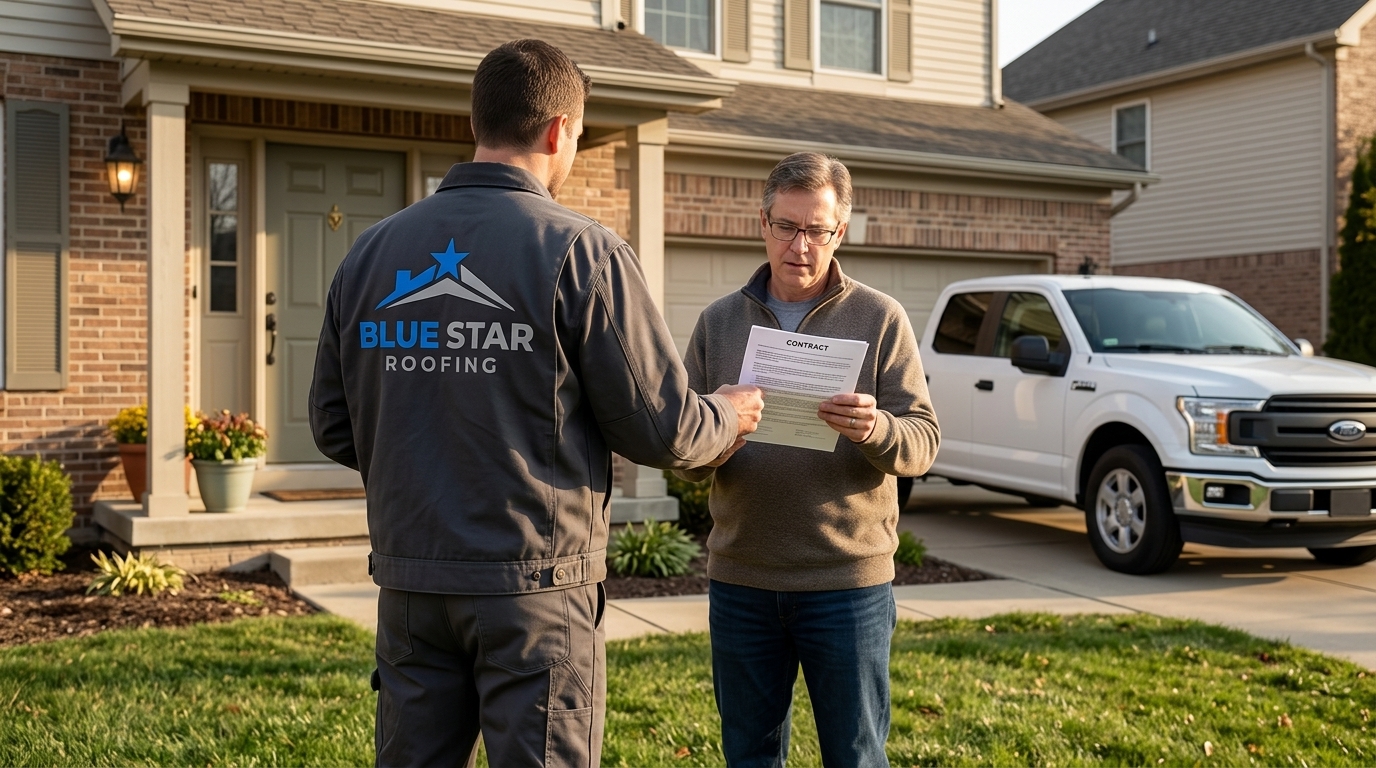
Most homeowners assume a roof replacement is straightforward — pick a contractor, choose materials, and get it done. In an HOA community, that process has several additional layers.
Your homeowners association has governing documents — typically called CC&Rs (Covenants, Conditions, and Restrictions) — that dictate what roofing materials, colors, and styles are permitted. These rules exist to maintain a consistent look across the neighborhood and protect property values for everyone.
In Anaheim, many HOA communities were built with specific architectural standards in mind, particularly in master-planned neighborhoods. That means your roof must match or closely complement the existing community aesthetic, even if you’re simply replacing damaged sections.
Practical tip: Pull your CC&Rs before you contact any contractor. Knowing the approved materials list upfront will help you avoid wasting time on quotes for products your HOA won’t approve.
How HOA Roofing Anaheim Rules Are Enforced
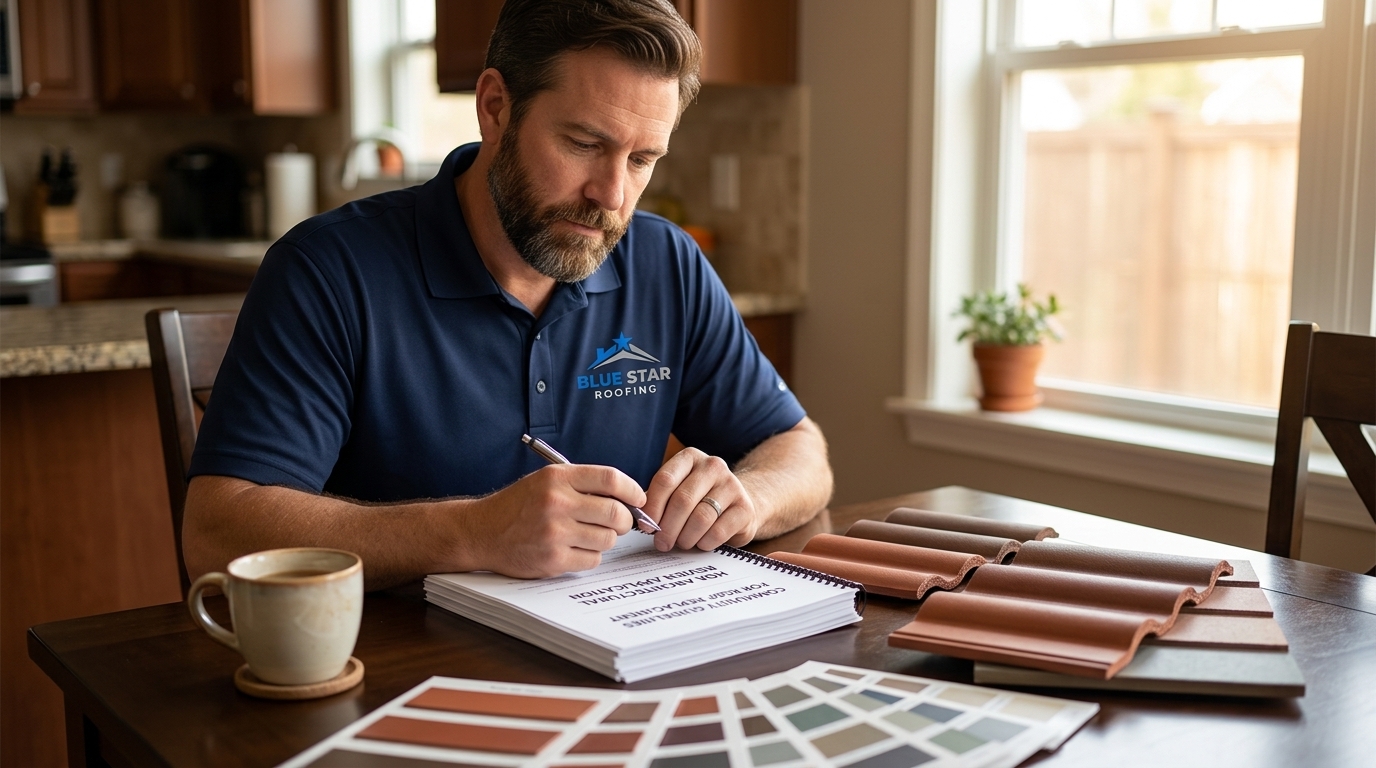
HOA boards typically enforce roofing rules through an Architectural Review Committee (ARC). Before any roofing work begins, you’ll need to submit an Architectural Change Request — sometimes called an ACC request — for board approval.
If you skip this step and start work without approval, you risk fines, forced removal of non-compliant materials, and disputes that can delay your project for months. Some Anaheim HOAs also require a post-installation inspection to confirm the completed work matches the approved application.
The enforcement process varies by community, but the safest approach is always to get written approval before a single shingle or tile is removed.
Understanding the HOA Approval Process for Roof Work
The approval process is the step most homeowners underestimate. It’s not just about picking the right color — it involves documentation, timelines, and sometimes back-and-forth with the board.
Here’s what a typical HOA roofing approval process looks like:
- Review your CC&Rs and identify the approved materials and color palette.
- Get contractor bids that specify the exact materials, manufacturer, and product line.
- Submit your Architectural Change Request with contractor details, material specs, and a project timeline.
- Wait for written approval — this can take anywhere from 7 to 30 days depending on your HOA.
- Schedule work only after written approval is in hand.
Some HOAs in Anaheim also require proof that your contractor carries specific insurance minimums or holds a valid California contractor’s license. Confirming these requirements early prevents last-minute scrambles.
Practical tip: Submit your request with more detail than you think is necessary. Boards approve thorough applications faster because they require fewer follow-up questions.
Approved Roofing Materials Commonly Allowed by Anaheim HOAs
Material selection is where many homeowners run into trouble. Not every product your contractor recommends will be on your HOA’s approved list.
The most commonly approved roofing materials in Anaheim HOA communities include:
- Concrete or clay tile: The most prevalent choice in Southern California HOA neighborhoods. Many communities require tile to maintain architectural consistency.
- Composition shingles: Allowed in some communities, but often restricted to specific profiles and color ranges.
- Cool roof-rated products: California’s Title 24 energy code requires cool roof compliance for re-roofing projects, and many HOAs have incorporated this into their standards.
Metal roofing and flat roofing systems are less common in residential HOA settings but may be permitted in certain communities — always verify before assuming.
Practical tip: Ask your contractor to provide the manufacturer’s product sheet for any material they recommend. This document is exactly what your HOA’s ARC needs to make a fast decision.
Color and Style Matching Requirements
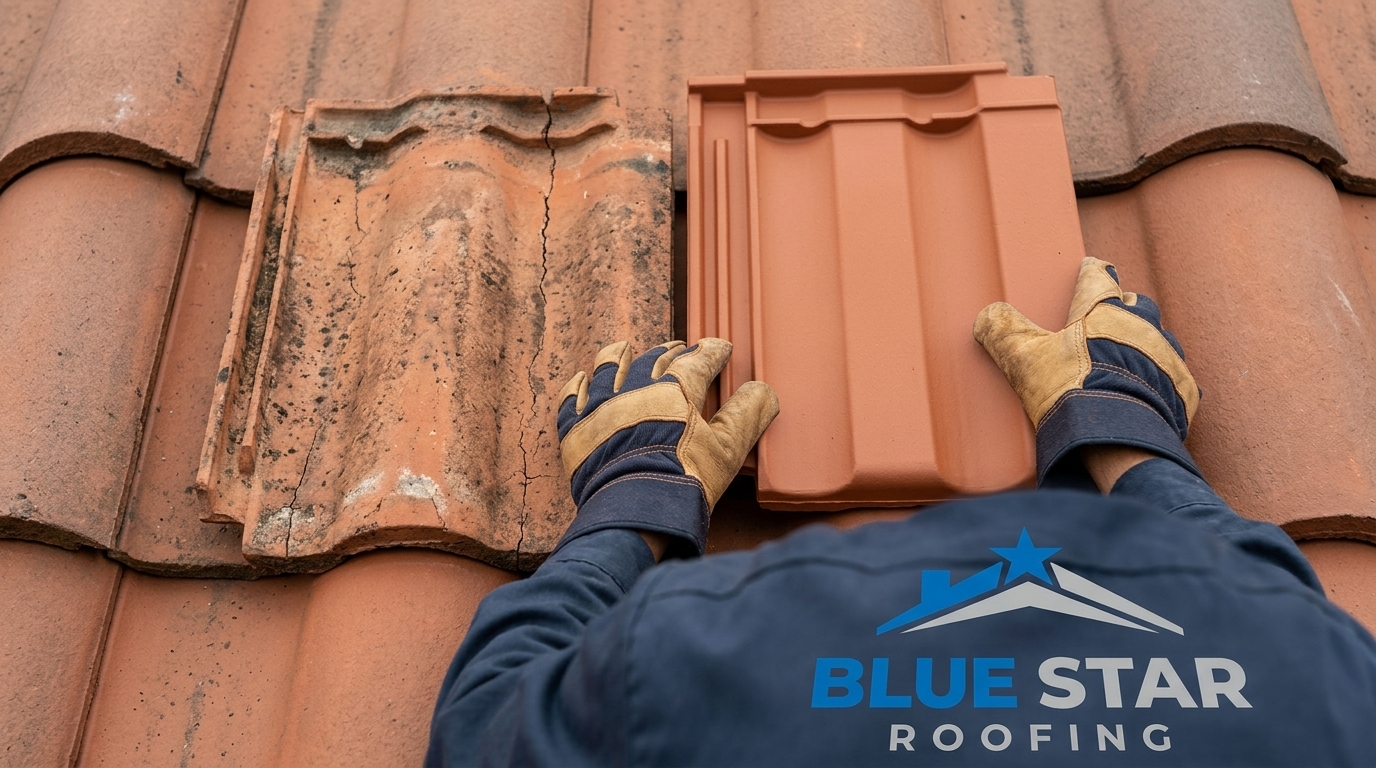
Beyond material type, most HOAs specify an approved color palette. Even if you’re replacing your entire roof, you’ll typically need to stay within a defined range of earth tones, grays, or terracotta shades that match the community’s existing look.
Some communities require an exact color match to the original installation. Others allow a range of approved alternatives. Either way, bringing physical samples — not just digital swatches — to your HOA review meeting can speed up the approval process significantly.
If your home is in a historic district or a community with strict architectural guidelines, the color requirements may be even more specific. Check with your HOA management company if you’re unsure.
What to Look for in an HOA Approved Roofer in Anaheim
Not every roofing contractor has experience working within HOA guidelines. Choosing the wrong one can mean delays, rejected applications, and costly do-overs.
When evaluating contractors for your HOA project, look for these qualities:
- Familiarity with the HOA approval process: A contractor who has worked in HOA communities before will know how to prepare documentation that gets approved quickly.
- Knowledge of California Title 24 requirements: Re-roofing in California must meet energy code standards, and your contractor should be able to confirm compliance upfront.
- Proper licensing and insurance: California requires roofing contractors to hold a C-39 license. Your HOA may also require a minimum general liability coverage amount — often $1 million or more.
- Clear written proposals: Your HOA needs detailed specs. A contractor who provides vague estimates won’t give you the documentation you need for approval.
An HOA approved roofer in Anaheim understands that the job doesn’t start when the crew shows up — it starts when the paperwork is submitted correctly.
Practical tip: Ask any contractor you’re considering whether they’ve worked in your specific HOA community or a similar one nearby. Direct experience is the fastest shortcut to a smooth approval.
HOA Roofing Anaheim: Common Mistakes That Delay Projects
Even well-intentioned homeowners make mistakes that push their roofing projects back by weeks. Here are the most common ones to avoid.
Starting work before approval: This is the most costly mistake. Some homeowners assume verbal approval from a board member is enough. It isn’t. Always get written confirmation.
Submitting incomplete applications: Missing a contractor license number, an insurance certificate, or a material spec sheet will send your application back to the start. Double-check every required document before submitting.
Choosing non-compliant materials: Picking a product that looks similar to an approved material isn’t the same as picking the approved material. Verify the exact manufacturer and product line against your HOA’s approved list.
Ignoring California building permits: HOA approval and city building permits are separate requirements. A full roof replacement in Anaheim typically requires a permit from the City of Anaheim Building Division. Your contractor should handle this, but confirm it’s included in their scope of work.
Practical tip: Create a simple checklist before submitting your HOA application — contractor license, insurance certificate, material spec sheet, color sample, and project timeline. If all five are included, your application is in strong shape.
How Blue Star Roofing Handles HOA Projects in Anaheim
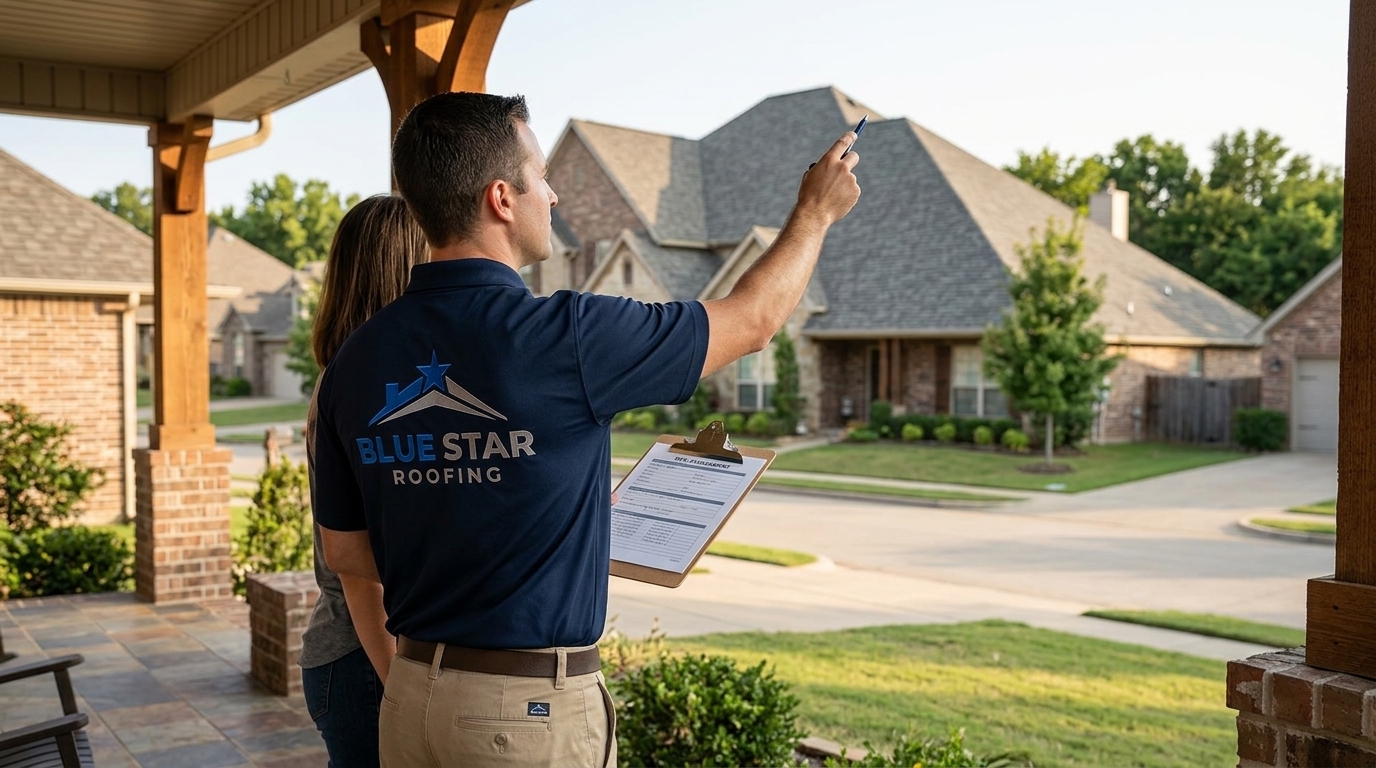
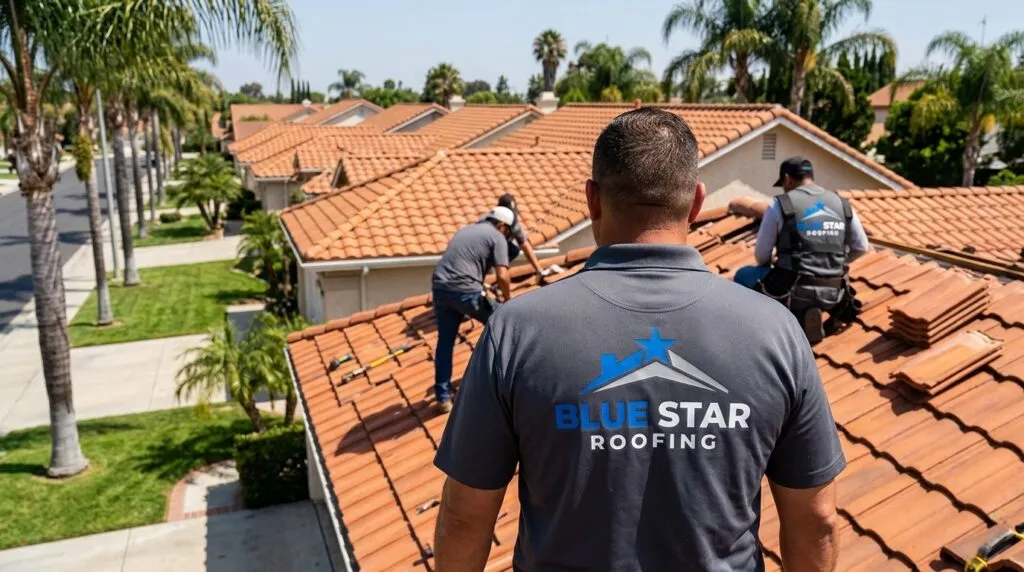
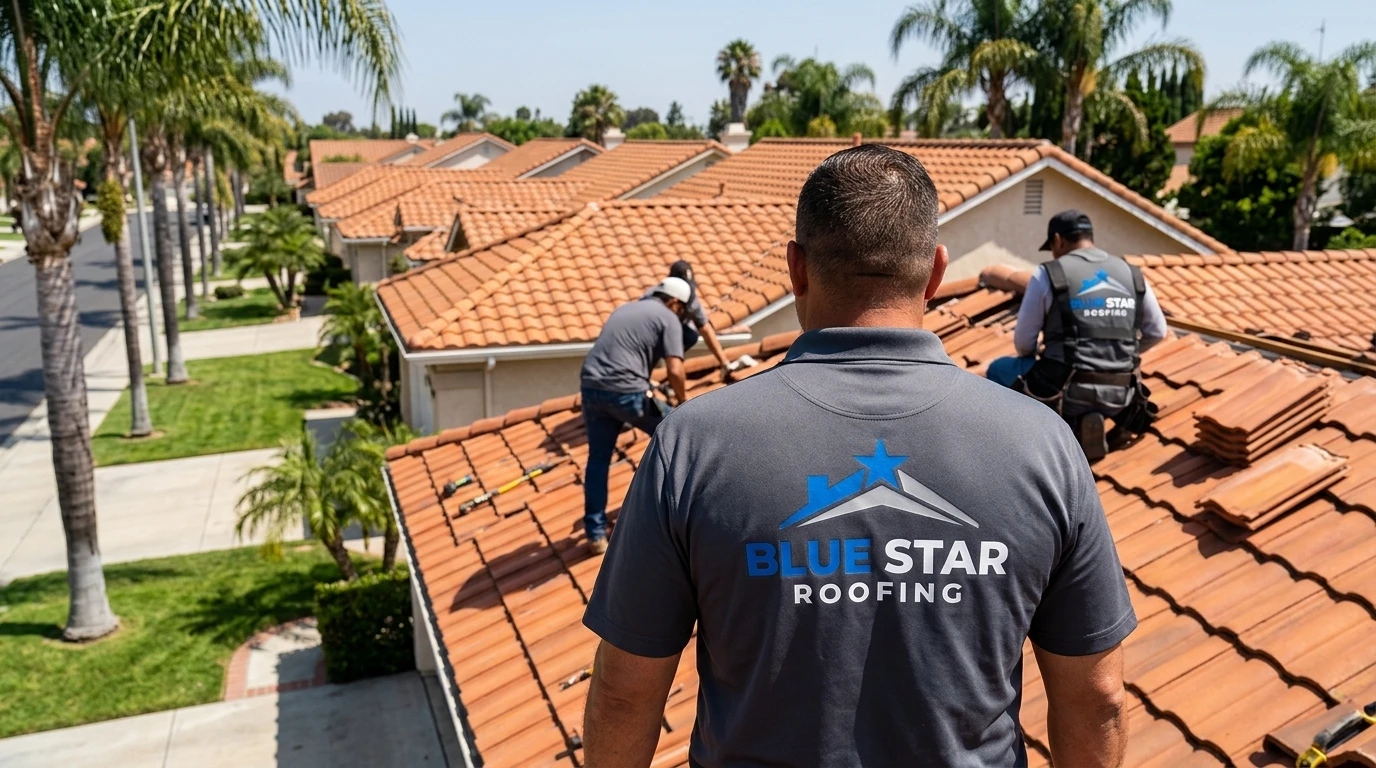
Blue Star Roofing has worked with homeowners across Anaheim’s HOA communities and understands the specific documentation, material standards, and approval timelines these projects require.
From the first consultation, the team reviews your CC&Rs and identifies compliant material options before any proposal is written. That means the quote you receive is already built around what your HOA will approve — not what needs to be revised later.
Blue Star Roofing also provides the full documentation package your HOA’s ARC needs: contractor license verification, insurance certificates, manufacturer product sheets, and a detailed project scope. This approach reduces back-and-forth with the board and keeps your project on schedule.
For homeowners navigating HOA roofing in Anaheim for the first time, having a contractor who treats the paperwork as seriously as the installation makes a significant difference.
Practical tip: When you contact Blue Star Roofing, have your HOA management company’s contact information ready. The team can reach out directly to confirm any requirements specific to your community.
HOA roofing in Anaheim requires more planning than a standard roof replacement, but it’s entirely manageable when you know the process. Understanding your CC&Rs, submitting a complete approval application, choosing compliant materials, and working with an experienced contractor are the four steps that separate smooth projects from stressful ones. The rules exist to protect your community’s value — and when you follow them correctly, the result is a roof that looks great and keeps your HOA satisfied. If you’re ready to move forward, Blue Star Roofing is here to guide you through every step.
Contact Blue Star Roofing today for a free consultation on your HOA roofing project in Anaheim.
Frequently Asked Questions
Do I need HOA approval before starting a roof replacement in Anaheim?
Yes, in virtually all HOA communities you must receive written approval from the Architectural Review Committee before any roofing work begins. Starting without approval can result in fines, forced removal of non-compliant materials, and project delays. Always get written confirmation — verbal approval from a board member is not sufficient.
What does HOA roofing in Anaheim typically require in terms of materials?
HOA roofing in Anaheim most commonly requires concrete or clay tile to maintain the architectural consistency of the community. Some HOAs also permit composition shingles within a defined color range. All re-roofing projects must also comply with California’s Title 24 cool roof energy standards, which many HOAs have incorporated into their guidelines.
How long does HOA roofing approval take in Anaheim?
Approval timelines vary by community, but most HOA boards in Anaheim take between 7 and 30 days to review an Architectural Change Request. Submitting a complete application with all required documentation — contractor license, insurance, material specs, and color samples — is the best way to avoid delays and get a faster decision.
What should I look for when hiring an HOA approved roofer in Anaheim?
Look for a contractor who holds a valid California C-39 roofing license, carries adequate liability insurance, and has direct experience working within HOA communities. An HOA approved roofer in Anaheim should be able to prepare the full documentation package your board needs and should be familiar with California Title 24 compliance requirements.
Can my HOA reject my roofing contractor even if the materials are approved?
Yes, some HOAs reserve the right to require that contractors meet specific insurance minimums or licensing standards before approving a project. This is separate from material approval. Always confirm your contractor’s credentials meet your HOA’s requirements before submitting your application to avoid having an otherwise complete request rejected on a technicality.