Roof Maintenance Irvine: 7 Essential Steps to Protect Your Home
Staying on top of roof maintenance Irvine homeowners need is one of the smartest investments you can make in your property. Irvine’s dry summers, occasional heavy rains, and Santa Ana wind events all put stress on roofing materials in ways that quietly add up over time. A consistent maintenance routine catches small problems early — before a minor crack becomes a major leak that costs thousands to fix.
Why Roof Maintenance Irvine Homeowners Prioritize Matters So Much
Irvine sits in a climate zone that can fool homeowners into a false sense of security. Because it rarely rains hard for extended periods, many people assume their roof is fine — until it isn’t.
The reality is that UV exposure, heat cycling, and wind-driven debris cause gradual deterioration that’s invisible from the ground. Roof maintenance Irvine professionals recommend catching these issues during routine inspections rather than after a storm reveals a leak.
Skipping annual upkeep can void manufacturer warranties on roofing materials. Most shingle and tile manufacturers require documented maintenance to honor warranty claims — a fact many homeowners only discover when it’s too late.
Practical tip: Keep a simple log of every inspection and repair. A dated record protects your warranty and adds value when you sell your home.
What a Complete Roof Maintenance Irvine Inspection Should Cover
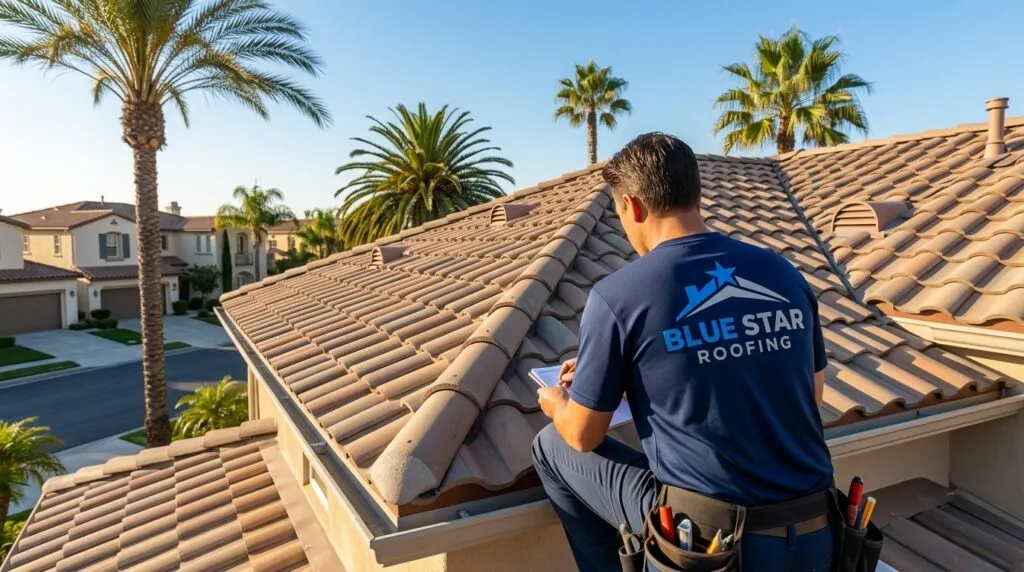
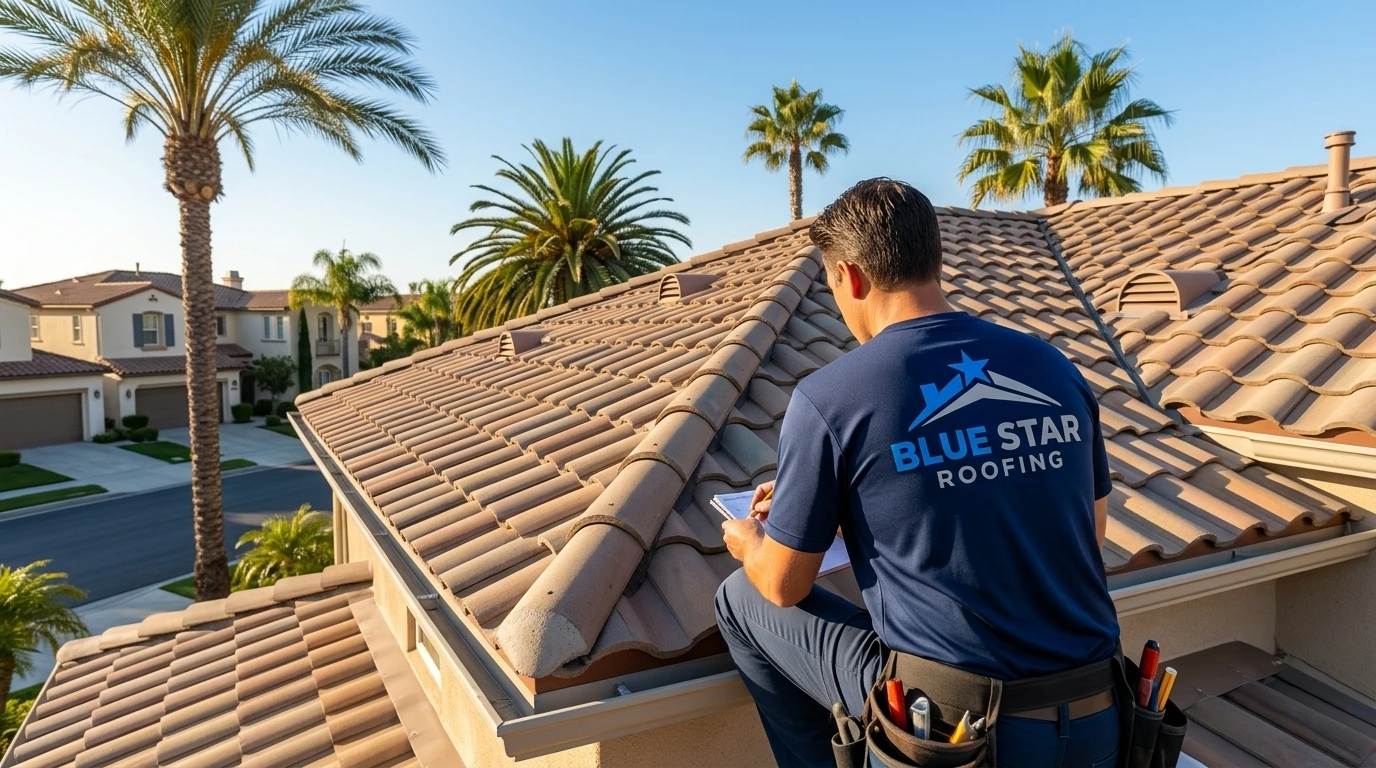
A thorough inspection goes well beyond a quick visual scan from the driveway. Knowing what a qualified contractor checks helps you ask the right questions and evaluate the quality of service you’re receiving.
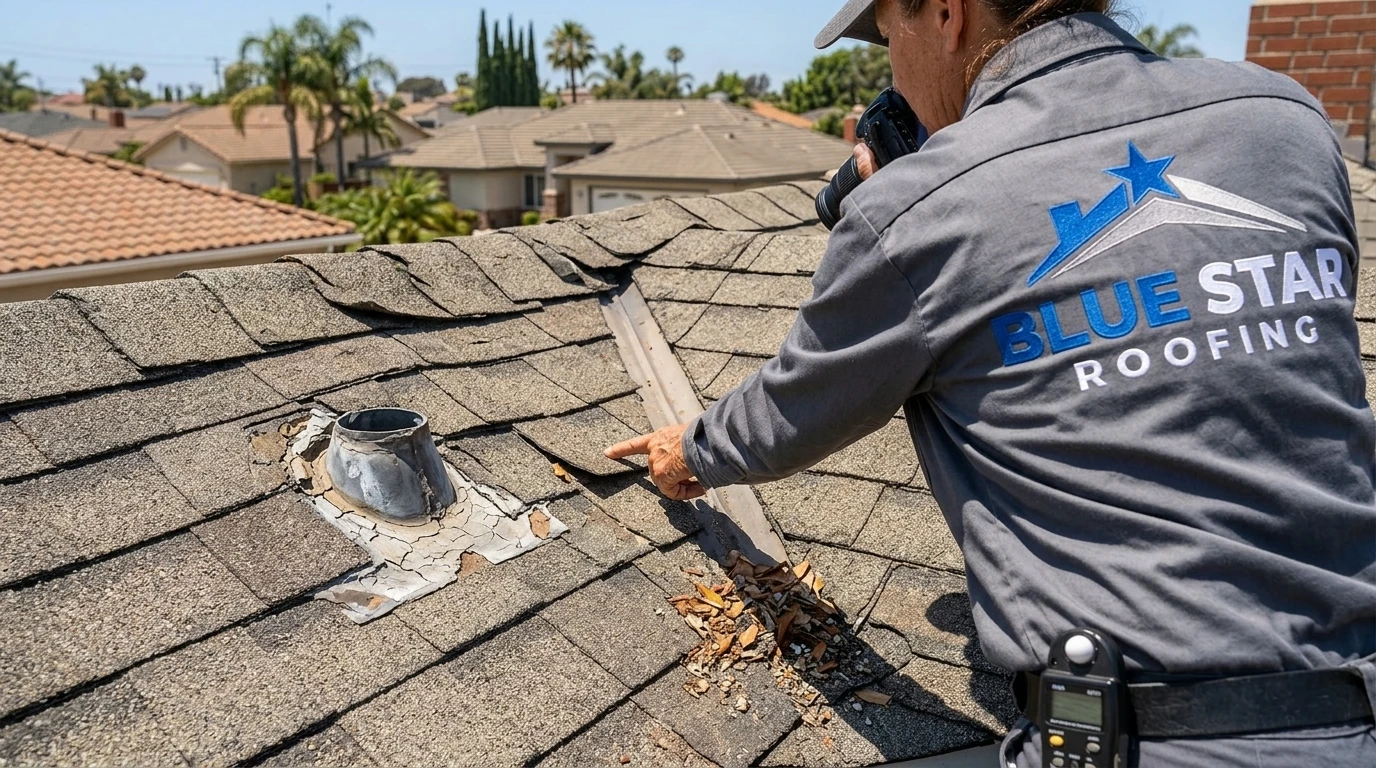
Here’s what a complete roof maintenance Irvine inspection should include:
- Shingles and tiles: Check for cracks, curling, missing pieces, or granule loss on asphalt shingles
- Flashing: Inspect metal flashing around chimneys, vents, and skylights for rust, gaps, or lifted edges
- Gutters and downspouts: Clear debris and confirm water flows away from the foundation
- Fascia and soffits: Look for rot, pest damage, or moisture staining
- Attic ventilation: Verify airflow is adequate to prevent heat and moisture buildup
- Roof valleys: Confirm no debris is trapping moisture in low-lying areas
If you’re unsure where to start, the team at Blue Star Roofing offers comprehensive inspections tailored to Irvine’s specific climate conditions.
Practical tip: Always inspect your roof after a Santa Ana wind event — these winds can lift flashing and deposit debris that accelerates wear.
Roof Maintenance Irvine: Seasonal Debris Removal
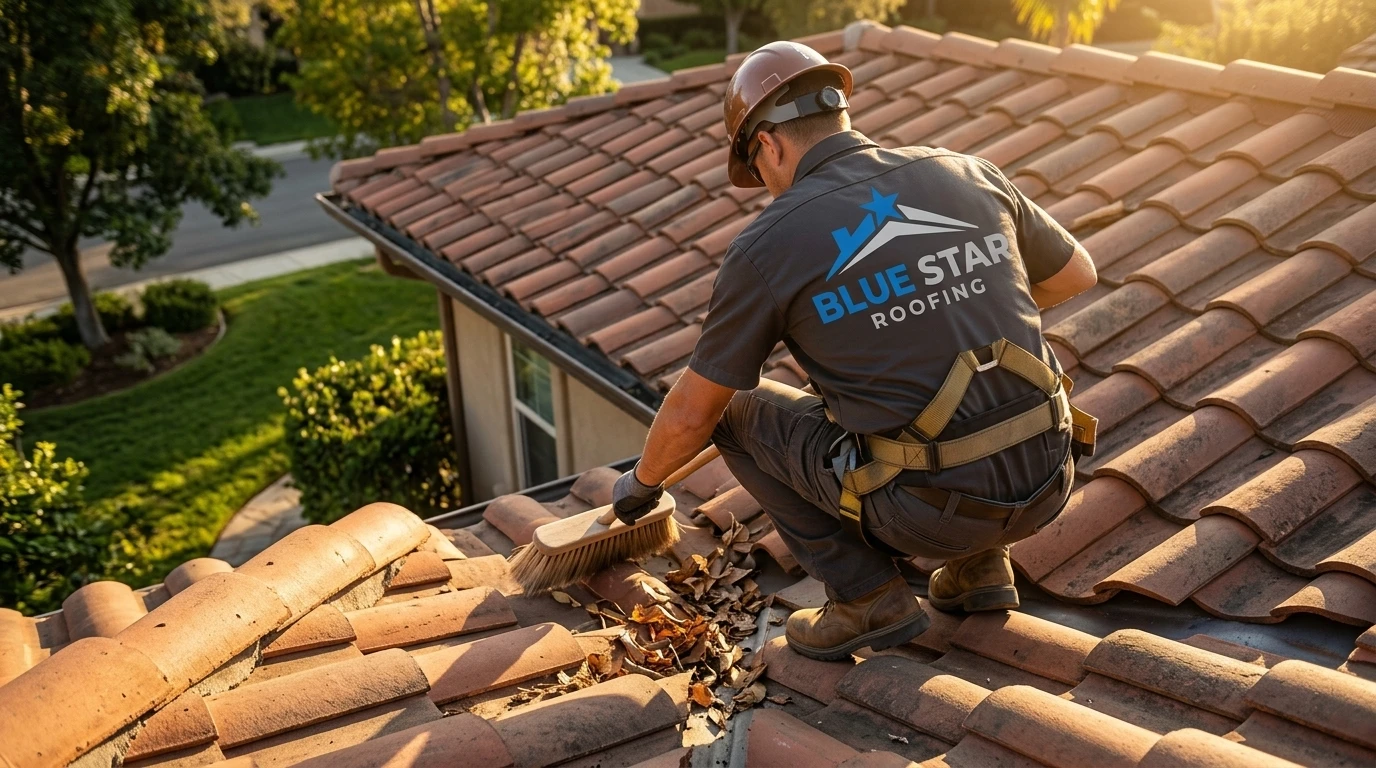
Debris removal is one of the most overlooked parts of roof maintenance Irvine homeowners can handle proactively. Leaves, pine needles, and dirt accumulate in roof valleys and gutters, trapping moisture against roofing materials and accelerating decay.
In Irvine, eucalyptus leaves and palm fronds are common culprits. They break down slowly and hold moisture even during dry months. Clearing them twice a year — ideally in spring and fall — significantly extends the life of your roofing system.
Never use a pressure washer on tile or asphalt shingles. High-pressure water strips protective granules and can crack tiles. A soft-bristle brush or low-pressure rinse is the safe approach.
The 7 Essential Steps of Annual Roof Care in Irvine
A structured annual routine keeps your roof in peak condition and helps you budget for repairs before they become emergencies. These seven steps form the backbone of effective annual roof care Irvine contractors recommend.
- Schedule a professional inspection — Have a licensed contractor walk your roof at least once a year, ideally in late fall before the rainy season
- Clear all debris — Remove leaves, branches, and dirt from the roof surface, valleys, and gutters
- Inspect and reseal flashing — Reapply roofing sealant around any flashing that shows gaps or cracking
- Check attic ventilation — Poor ventilation traps heat and moisture, shortening roof life significantly; the U.S. Department of Energy notes that proper attic ventilation can reduce cooling costs and extend roofing material life
- Trim overhanging branches — Branches that touch or hang over the roof cause abrasion and provide a pathway for pests
- Inspect interior ceilings — Water stains or soft spots on interior ceilings often signal a roof leak before it becomes visible outside
- Document everything — Photograph the roof condition and keep records of any repairs or maintenance performed
Practical tip: Pair your roof inspection with your annual HVAC service call — both happen in fall and it’s easy to schedule them together.
How Irvine’s Climate Affects Your Roof Year-Round
Irvine’s Mediterranean climate creates a unique set of challenges for roofing materials. Understanding these seasonal stressors helps you time your roof upkeep Irvine schedule more effectively.
Summer: Prolonged UV exposure degrades asphalt shingles and dries out sealants. Roof surface temperatures can exceed 150°F on hot days, causing materials to expand and contract repeatedly.
Fall: Santa Ana winds arrive, carrying debris and occasionally lifting poorly secured flashing. This is the highest-risk season for minor damage that goes unnoticed.
Winter: Irvine’s rainy season is short but intense. Any existing gaps or cracks in flashing or sealant will allow water intrusion during heavy rain events.
Spring: Moisture from winter rains can reveal hidden damage. Spring is an ideal time to assess what the rainy season exposed and address it before summer heat sets in.
Energy-efficient roofing materials that reflect solar heat are worth considering during any re-roofing project. ENERGY STAR certified roofing products can reduce roof surface temperatures and lower cooling costs in Southern California’s warm climate.
Practical tip: Schedule your professional inspection in October — after summer heat stress and just before the rainy season begins.
Common Roof Problems Found During Maintenance in Irvine
Knowing what problems are most common in this area helps you understand what your contractor is looking for and why certain repairs come up repeatedly.
The most frequently found issues during roof maintenance in Irvine include:
- Cracked or slipped tiles: Clay and concrete tiles are popular in Irvine but can crack under foot traffic or thermal stress
- Flashing failures: The sealant around chimneys and vents dries out faster in Southern California’s heat, creating gaps that allow water entry
- Granule loss on asphalt shingles: UV exposure accelerates granule shedding, which reduces the shingle’s ability to reflect heat and resist water
- Clogged gutters: Debris-filled gutters cause water to back up under the roof edge, leading to fascia rot and potential interior leaks
- Pest intrusion: Gaps in soffits or damaged fascia boards invite birds and rodents into the attic space
Catching these issues early during routine upkeep is far less expensive than emergency repairs. If you’ve noticed any of these warning signs, schedule a free roof inspection with Blue Star Roofing before the problem worsens.
Practical tip: After any rain event, check your attic with a flashlight for signs of moisture, drips, or daylight showing through the decking.
How Often Should You Schedule Roof Maintenance in Irvine?
The general industry recommendation is at least one professional inspection per year. However, certain circumstances call for more frequent attention.
Consider scheduling additional roof maintenance in Irvine if:
- Your roof is more than 15 years old
- You’ve recently experienced a major wind or rain event
- You notice interior water stains or musty odors in the attic
- You’ve had recent tree work done near the roofline
- You’re preparing to sell your home
For newer roofs in good condition, an annual inspection combined with twice-yearly gutter cleaning is typically sufficient. Older roofs benefit from biannual professional inspections — once in spring and once in fall.
Practical tip: Set a recurring calendar reminder every October 1st for your annual roof inspection. Consistency is the single biggest factor in extending roof life.
Choosing the Right Contractor for Roof Maintenance Irvine Residents Can Trust
Not every roofing contractor offers the same level of service. When evaluating who to hire for roof maintenance Irvine homeowners should look for specific qualifications.
Key things to verify before hiring:
- California contractor’s license: Verify the license number through the California Contractors State License Board
- Liability insurance and workers’ comp: Protects you if a worker is injured on your property
- Local experience: A contractor familiar with Irvine’s climate and common roofing materials will provide more relevant recommendations
- Written estimates: Any reputable contractor will provide a detailed written scope of work before starting
- References and reviews: Check Google and Yelp reviews from local homeowners
Blue Star Roofing brings local expertise and transparent pricing to every job. Visit the Blue Star Roofing homepage to learn more about the services offered to Irvine homeowners.
Practical tip: Get at least two written estimates before committing to any maintenance or repair work — it helps you benchmark fair pricing and spot red flags.
Consistent roof maintenance Irvine homeowners commit to year after year is what separates a roof that lasts 30 years from one that fails at 15. Irvine’s climate is forgiving in many ways, but the combination of UV exposure, heat cycling, and seasonal wind events quietly wears down even well-installed roofing systems. The seven steps outlined in this guide give you a clear, actionable framework to protect your investment. Whether you’re scheduling your first professional inspection or building a long-term maintenance routine, starting now is always better than waiting for a leak to force your hand.
Ready to protect your roof? Contact Blue Star Roofing today to schedule a professional inspection and get expert roof maintenance Irvine homeowners have come to rely on.
Frequently Asked Questions
How much does roof maintenance in Irvine typically cost?
The cost of roof maintenance in Irvine varies depending on roof size, material type, and the scope of work needed. A basic professional inspection typically runs between $150 and $300, while a full maintenance service that includes cleaning, minor repairs, and flashing resealing can range from $400 to $800. Catching problems early almost always costs less than emergency repairs.
What is the best time of year to schedule roof maintenance Irvine homeowners should plan for?
The best time to schedule roof maintenance Irvine contractors recommend is October — after the summer heat has stressed roofing materials and just before the rainy season begins. This timing lets you address any UV or wind damage before winter rains expose hidden vulnerabilities. A spring inspection in March or April is a good secondary option to assess any damage from the rainy season.
Can I do my own roof maintenance, or should I hire a professional?
Homeowners can safely handle some tasks like clearing gutters, trimming overhanging branches, and doing a visual inspection from the ground. However, walking on a roof without proper training and safety equipment is dangerous, and untrained eyes often miss early signs of flashing failure or tile cracking. Hiring a licensed contractor for at least one annual inspection is strongly recommended.
How does roof maintenance Irvine’s climate makes necessary differ from other regions?
Roof maintenance Irvine’s climate demands focuses heavily on UV protection, heat cycling, and wind damage — challenges that are less prominent in cooler or wetter climates. The intense Southern California sun degrades sealants and shingle granules faster than average, and Santa Ana wind events can lift flashing that would otherwise stay secure for years. Local contractors understand these specific stressors and tailor their inspections accordingly.
Does regular roof upkeep actually extend the life of my roof?
Yes — consistent roof upkeep is one of the most effective ways to maximize the lifespan of your roofing system. Most asphalt shingle roofs are rated for 20–30 years, but without regular maintenance many fail well before that. Catching and repairing minor issues like cracked sealant, lifted flashing, or clogged gutters prevents the kind of water intrusion that causes structural damage and dramatically shortens roof life.