Solar Roofing Irvine: 7 Proven Things Every Homeowner Should Know Before Installing
Choosing solar roofing Irvine homeowners can rely on for decades is one of the most significant investments you’ll make in your home — and one of the smartest given Southern California’s year-round sunshine. But before you sign a contract or let anyone climb on your roof, there are critical details about roof compatibility, installation quality, and long-term savings that most homeowners simply don’t know. This guide breaks down exactly what you need to understand so you can move forward with confidence.
Why Solar Roofing Irvine Homes Are Uniquely Well-Suited for Solar Energy
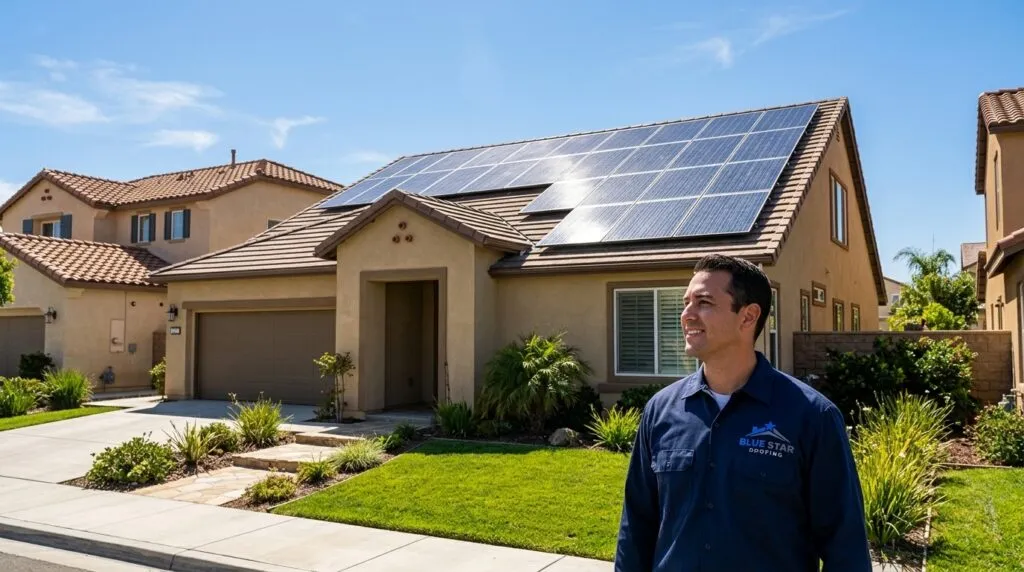
Irvine averages over 280 sunny days per year, making it one of the most productive locations in the country for residential solar energy. That consistent sun exposure means your system generates power reliably — not just in summer, but throughout the entire year.
The city’s relatively high electricity rates from Southern California Edison also mean that every kilowatt-hour your panels produce directly offsets a more expensive utility bill. The financial case for solar roofing Irvine residents consider is stronger here than in most U.S. cities.
Irvine’s newer planned communities also tend to feature homes with large, south- or west-facing roof planes — ideal orientations for maximum solar production. If your home was built in the last 30 years, there’s a good chance your roof geometry is already well-positioned.
Practical tip: Before getting quotes, use a free tool like the U.S. Department of Energy’s SunShot resources to understand your home’s solar potential based on location and roof orientation.
Your Roof’s Condition Matters More Than You Think
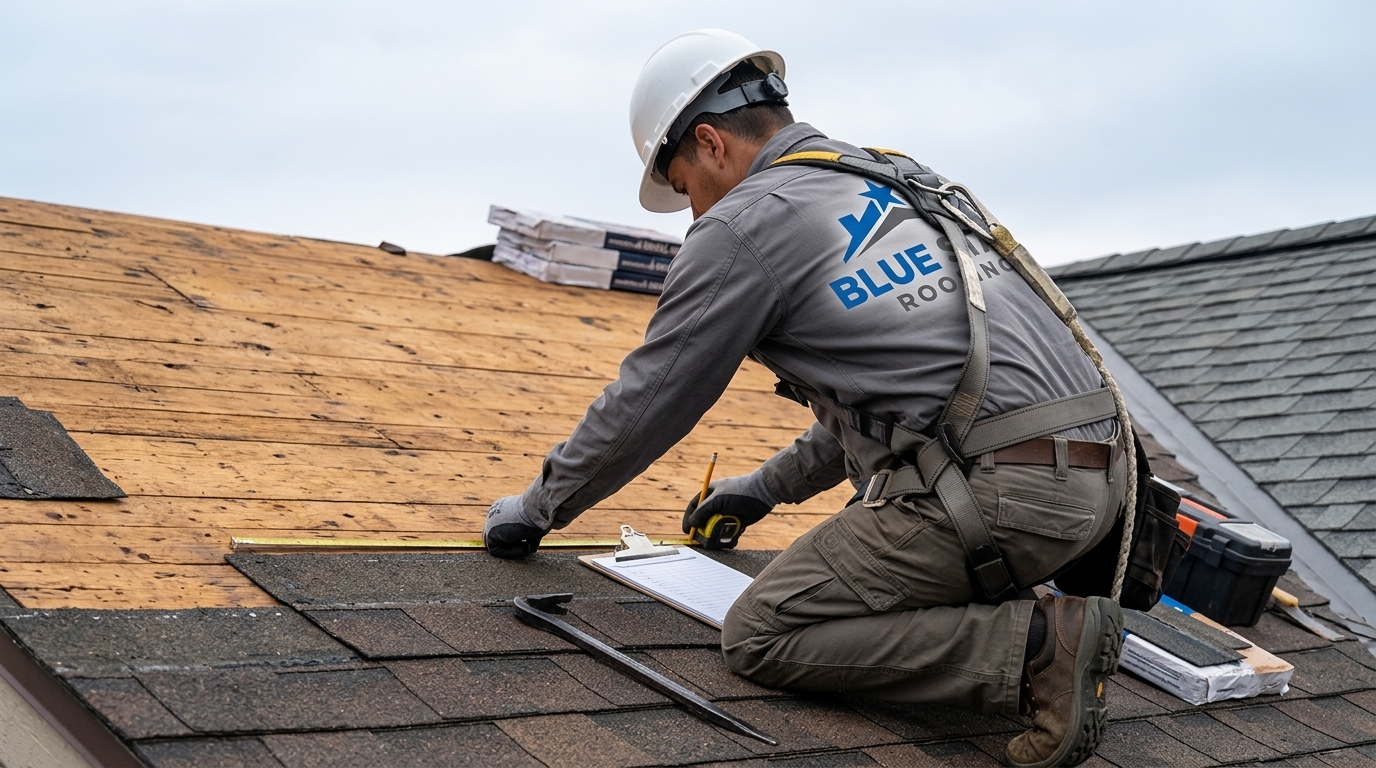
One of the most overlooked steps in any solar roofing Irvine project is a thorough roof inspection before installation begins. Solar panels are designed to last 25–30 years. If your roof is 15 years old and has 5–7 years of life left, you’ll be forced to remove and reinstall the entire panel system mid-life — at significant cost.
A qualified roofing contractor should evaluate your roof’s structural integrity, underlayment condition, and remaining lifespan before any solar work begins. This isn’t just a formality — it’s a step that can save you thousands of dollars.
At Blue Star Roofing, we always perform a full roof assessment before recommending any solar installation. We want your roof and your solar system to reach the end of their service lives at the same time — not years apart.
How Solar Roofing Irvine Installations Are Affected by Roof Age and Material
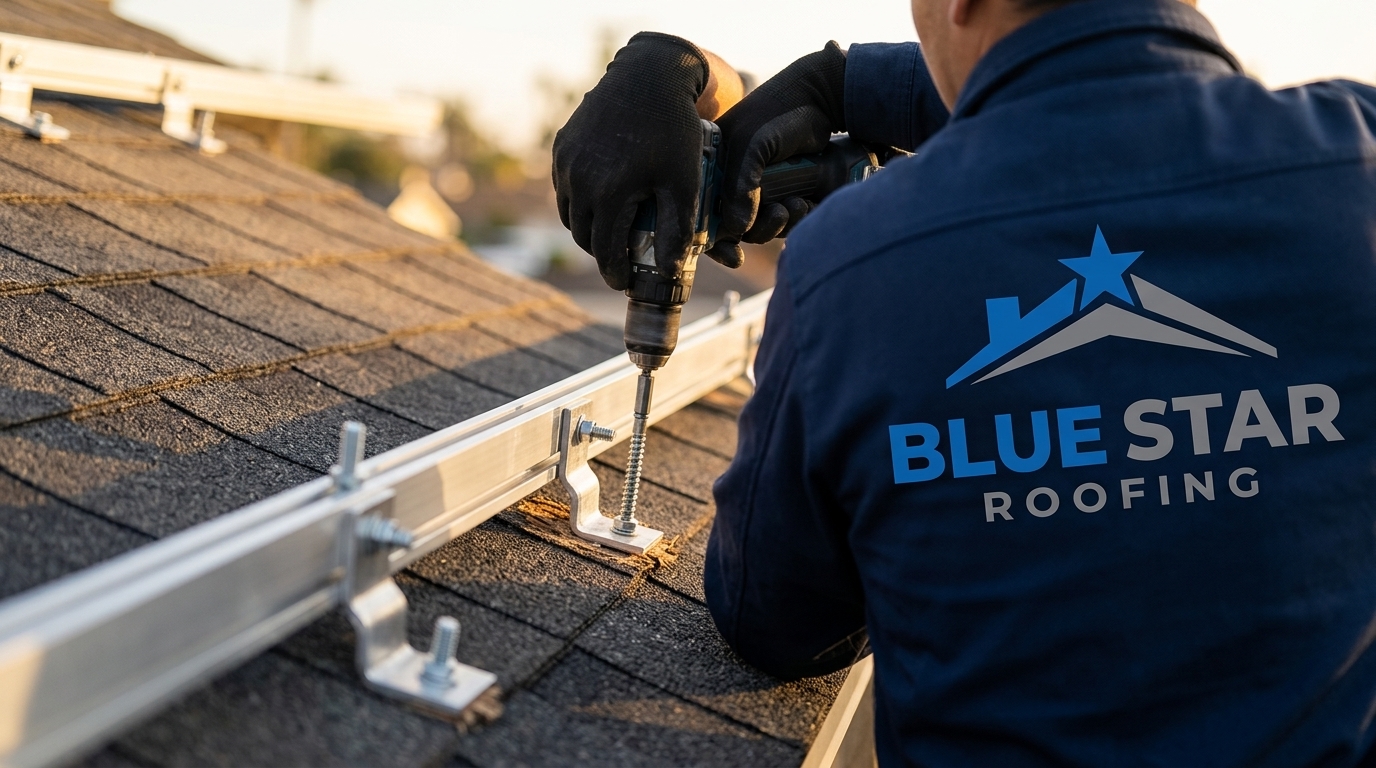
Different roofing materials handle solar panel mounting hardware differently. Asphalt shingles are the most common and easiest to work with — lag bolts penetrate cleanly and flashing seals reliably. Tile roofs, which are extremely common in Irvine, require a different approach: tiles must be carefully removed, mounting feet installed on the deck, and tiles replaced around the hardware.
If your tile roof is older or brittle, this process carries a real risk of cracking. A roofing contractor experienced in solar roofing Irvine installations will know how to handle tile roofs without causing damage — and will warranty their penetration work separately from the panel installer.
Flat or low-slope roofs common on some Irvine commercial and mixed-use properties use ballasted or mechanically attached racking systems that don’t penetrate the membrane at all, which is ideal for preserving waterproofing integrity.
Understanding the Costs and Savings of Solar Roofing in Irvine
The average residential solar system in Southern California costs between $15,000 and $30,000 before incentives, depending on system size and roof complexity. For most Irvine homeowners, a 6–8 kW system is sufficient to offset the majority of their electricity usage.
The federal solar Investment Tax Credit (ITC) currently allows you to deduct 30% of your total system cost from your federal taxes. On a $20,000 system, that’s a $6,000 reduction — a significant offset that makes solar roofing Irvine residents pursue far more financially accessible.
California’s net energy metering (NEM) program allows you to sell excess electricity back to the grid, further reducing your payback period. Most Irvine homeowners see a full return on investment within 7–10 years, after which the system produces essentially free electricity.
Practical tip: Always get at least three quotes and ask each contractor to provide a 25-year production estimate alongside the cost breakdown — not just the upfront price.
Permits, HOA Rules, and Local Regulations You Need to Know
Every solar roofing Irvine installation requires a building permit from the City of Irvine’s Community Development Department. Your contractor should pull this permit on your behalf — if they suggest skipping it, walk away immediately.
Irvine has a large number of HOA-governed communities, and while California law (Civil Code Section 714) generally prohibits HOAs from outright banning solar panels, they can impose reasonable aesthetic restrictions. This might include requirements about panel placement, color, or visibility from the street.
Submit your HOA application before signing a final contract with your installer. HOA approval timelines can range from two weeks to two months, and you don’t want to be locked into a contract while waiting on approval.
Practical tip: Request your HOA’s solar installation guidelines in writing before your first contractor meeting — it will help you get accurate quotes that account for any placement restrictions.
Choosing the Right Contractor for Solar Roofing Irvine Projects
Not every solar installer is also a licensed roofing contractor — and that distinction matters enormously. When a solar company installs panels without roofing expertise, penetrations can be improperly flashed, leading to leaks that may not appear for months or even years.
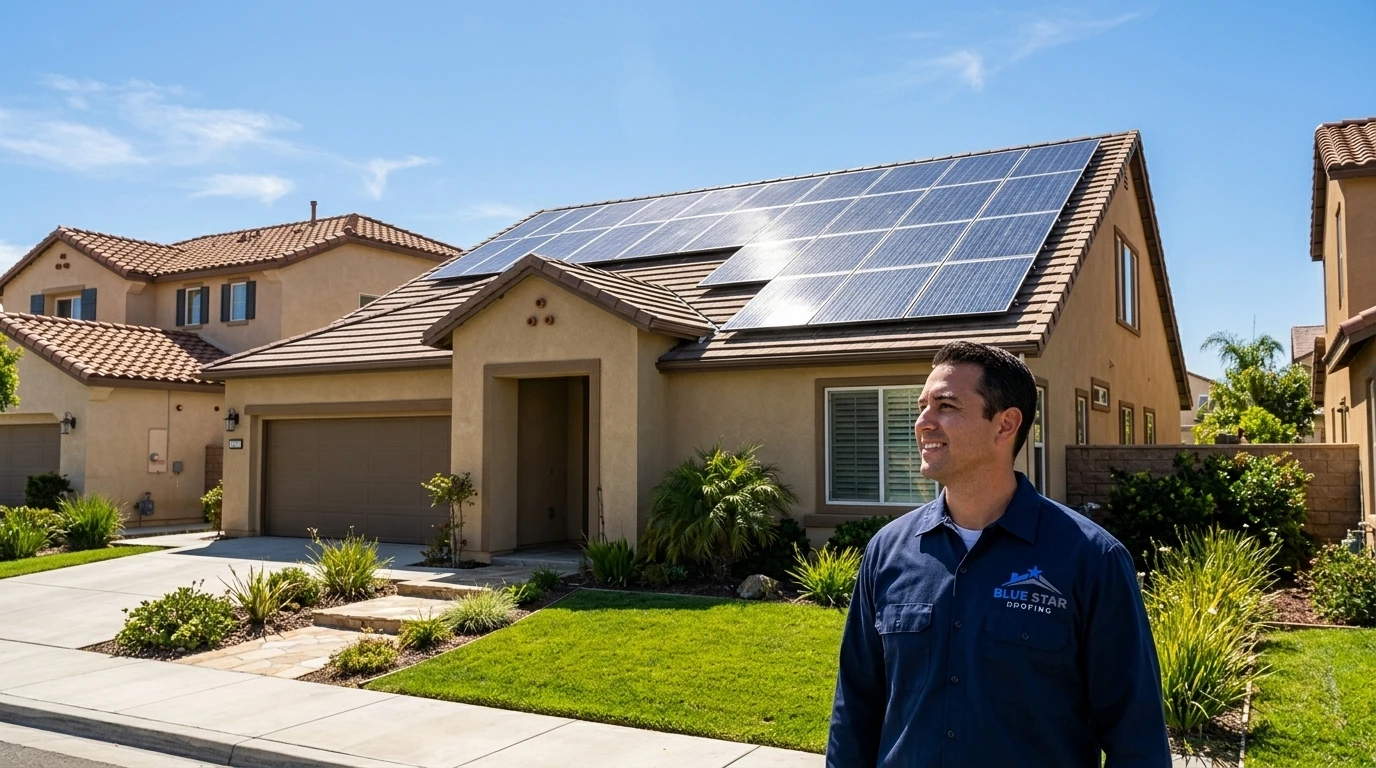
For solar roofing Irvine homeowners, the safest approach is to work with a contractor who holds both a California C-39 Roofing License and experience with solar installations. This ensures that the person making holes in your roof actually understands how to waterproof them correctly.
Ask every contractor you interview these three questions: Are you licensed and insured in California? Do you warranty your roof penetrations separately from the panel manufacturer’s warranty? Have you completed solar roofing Irvine projects on tile roofs specifically?
You can schedule a free roof inspection with Blue Star Roofing to get an honest assessment of your roof’s readiness before committing to any solar installation.
Practical tip: Verify any contractor’s license status directly through the California Contractors State License Board (CSLB) website before signing anything.
What to Expect During and After Your Solar Roof Installation
A typical residential solar roofing Irvine installation takes one to three days for the physical work, depending on system size and roof complexity. The permitting and utility interconnection process — getting your system approved to connect to the grid — can take an additional two to eight weeks.
During installation, your crew will mount the racking system, run conduit and wiring, install the inverter (usually in the garage or on an exterior wall), and connect the system to your electrical panel. Expect some noise and foot traffic on your roof during this period.
After installation, a city inspector will visit to sign off on the permit, and Southern California Edison will install a new bi-directional meter to track both consumption and production. Only after that final approval can your system be turned on.
Once live, your solar roofing Irvine system should require very little maintenance — occasional cleaning to remove dust and debris, and an annual check of wiring and connections. Most quality inverters come with monitoring apps that let you track daily production in real time.
Practical tip: Keep a copy of all permits, warranties, and interconnection agreements in a dedicated home file — you’ll need them if you ever sell the house or make an insurance claim. Learn more about energy-efficient home upgrades at Energy Star’s official resource center.
Long-Term Value: How Solar Roofing Irvine Affects Your Home’s Resale Price
Multiple studies have shown that homes with owned solar systems sell for a premium — often 3–4% more than comparable homes without solar. In a market like Irvine, where median home prices are well above $1 million, that premium can represent $30,000–$50,000 in added value.
The key word is “owned.” Leased solar systems can actually complicate a home sale because the buyer must qualify to assume the lease. If you’re investing in solar roofing Irvine for long-term value, purchasing the system outright — or financing it through a loan you own — is almost always the better strategy.
Buyers in Irvine are increasingly savvy about energy costs, and a home with a fully paid-off solar system and a low average utility bill is a genuine competitive advantage in any market condition.
Practical tip: When listing your home, provide potential buyers with 12 months of utility bills showing your average monthly cost — it’s one of the most compelling selling points you can offer.
Solar roofing Irvine homeowners invest in today can deliver decades of energy savings, meaningful home value increases, and genuine energy independence. But the quality of that investment depends entirely on the quality of the roof beneath the panels and the contractor who installs them. Don’t let an inexperienced installer make permanent penetrations in your roof without proper roofing credentials. Take the time to evaluate your roof’s condition, understand your HOA requirements, and choose a contractor who can stand behind both the roofing work and the solar installation. Blue Star Roofing brings the roofing expertise that solar projects in Irvine demand — so your system performs the way it’s supposed to for the full 25-year lifespan.
Ready to find out if your roof is solar-ready? Contact Blue Star Roofing today for a free, no-obligation roof inspection and honest solar readiness assessment.
Frequently Asked Questions
How much does solar roofing Irvine installation typically cost?
Most residential solar roofing Irvine projects cost between $15,000 and $30,000 before the federal 30% Investment Tax Credit. After the ITC, a typical 7 kW system often comes in around $14,000–$21,000 net. Your final cost depends on system size, roof complexity, and the equipment tier you choose.
Do I need to replace my roof before going solar?
Not necessarily, but your roof’s remaining lifespan should be evaluated before any solar installation begins. If your roof has fewer than 10 years of life left, replacing it first is usually the smarter financial move — removing and reinstalling panels mid-life is expensive. A licensed roofing contractor can give you an honest assessment.
Is solar roofing Irvine worth it given HOA restrictions?
Yes — California law protects homeowners’ right to install solar panels even in HOA communities. While your HOA can impose reasonable aesthetic guidelines, they cannot outright prohibit solar roofing Irvine installations. Submit your application early and work with a contractor familiar with local HOA processes to avoid delays.
How long does a solar roof installation take from start to finish?
The physical installation typically takes one to three days. However, the full process — including permitting, HOA approval if required, and utility interconnection — usually takes four to ten weeks from contract signing to system activation. Planning ahead and working with an experienced contractor helps minimize delays.
What happens to my solar panels if I need roof repairs later?
If your roof needs repairs in the area beneath the panels, the panels will need to be temporarily removed and reinstalled. This is why starting with a roof in excellent condition is so important. Working with a contractor who handles both roofing and solar — like Blue Star Roofing — means you have one point of contact for both the roof and the system above it.