How to Handle a Roof Insurance Claim in Anaheim the Right Way
Navigating roof insurance Anaheim claims can feel like a second job — especially right after a storm has already turned your week upside down. Most homeowners don’t realize that how you handle the first 48 hours after discovering damage can make or break your claim. This guide walks you through every step so you know exactly what to do, what to avoid, and how to get the payout your roof actually needs.
What Types of Roof Damage Are Typically Covered in Anaheim
Before you file anything, it helps to know what your policy is likely to cover. Most standard homeowner policies in California cover sudden and accidental damage — not gradual wear and tear.
- Common covered events include:
- Wind damage from Santa Ana conditions
- Hail impact (less frequent but it does happen)
- Falling tree limbs or debris
- Fire or smoke damage
- Vandalism
- What’s typically NOT covered:
- Aging or deteriorating shingles
- Improper installation from a previous contractor
- Damage caused by lack of maintenance
Practical tip: Pull out your homeowner’s policy right now and look for the section labeled “Dwelling Coverage” or “Coverage A.” This tells you your coverage limit and whether you have Actual Cash Value (ACV) or Replacement Cost Value (RCV) — a distinction that can mean thousands of dollars in your final payout.
How to Document Your Roof Damage Before Filing a Roof Insurance Anaheim Claim
Documentation is the foundation of every successful roof insurance Anaheim claim. The more evidence you gather before the adjuster arrives, the harder it is for the insurance company to minimize your payout.
Here’s what to do immediately after you notice damage:
Step-by-Step: Documenting Roof Damage for Your Roof Insurance Anaheim Claim
Follow these steps as soon as it’s safe to do so:
- Take photos and video from the ground first — capture the full roofline, gutters, and any visible damage from multiple angles.
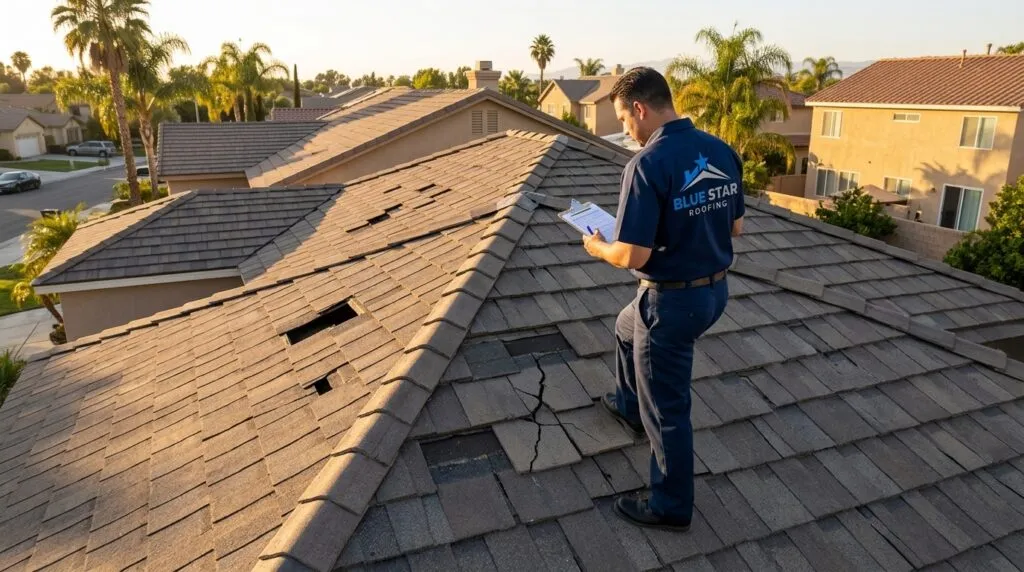
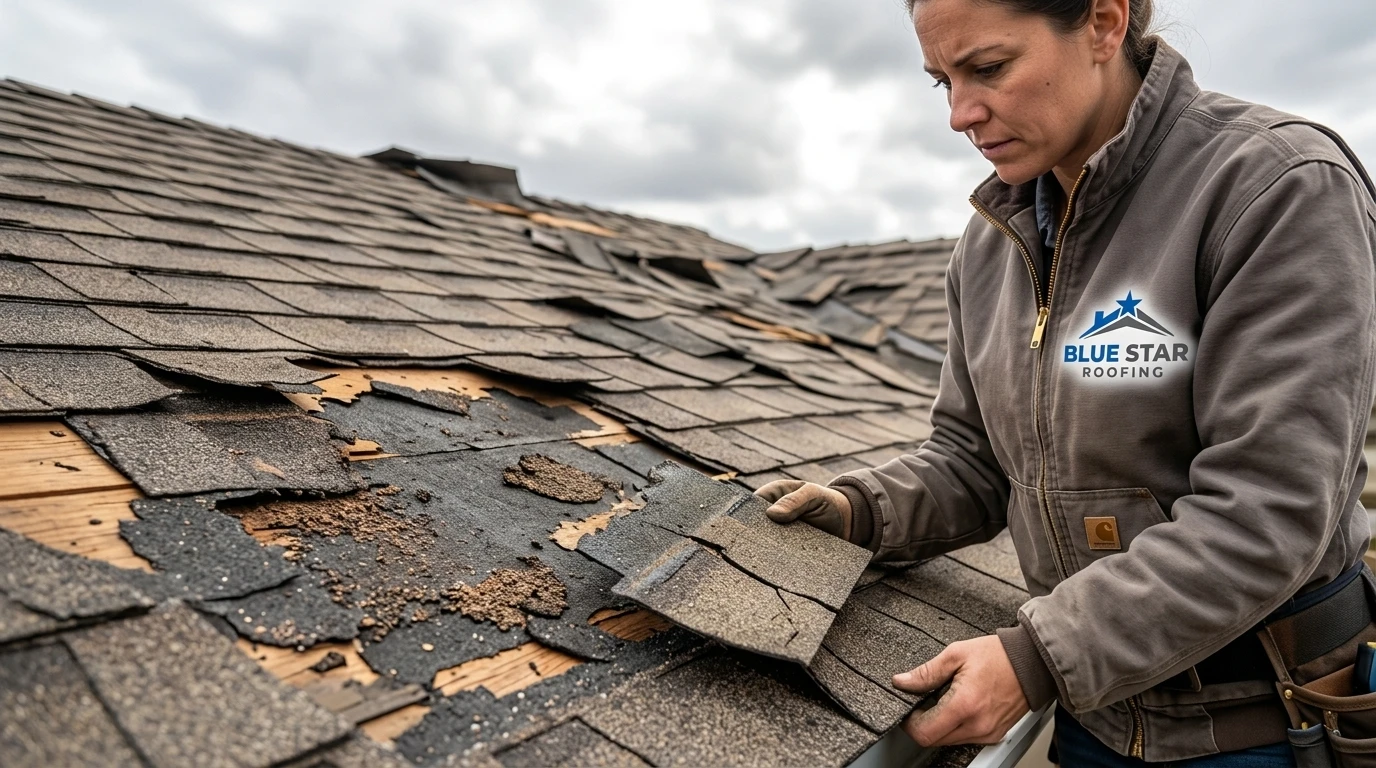
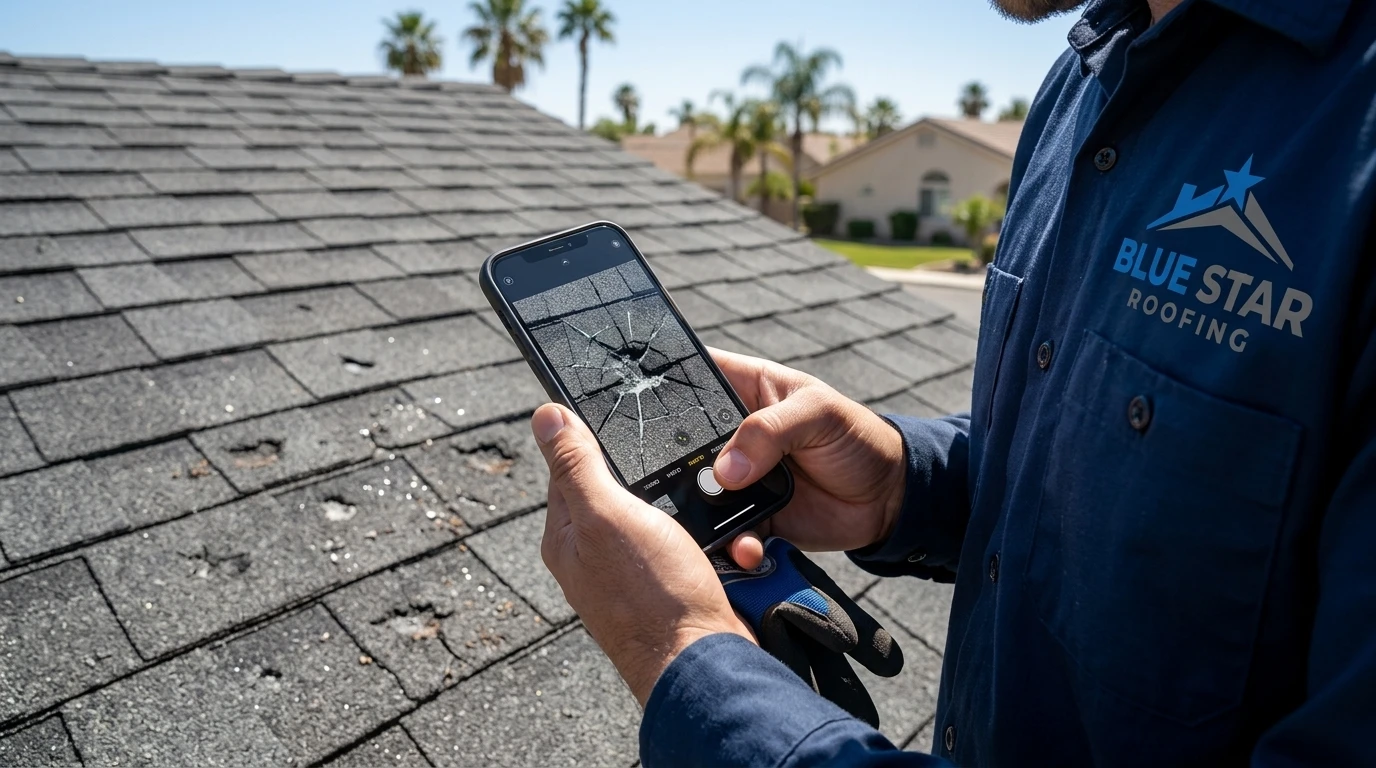
- If you can safely access the roof, photograph individual damaged shingles, dents, cracks, and any areas where the underlayment is exposed.
- Document interior damage too — water stains on ceilings, wet insulation in the attic, or damaged drywall all support your claim.
- Note the date and time of the storm or event that caused the damage.
- Save any weather reports or news coverage from that day — insurers use weather data to verify claims.
Practical tip: Create a dedicated folder on your phone or computer labeled with the date of the damage. Keep every photo, receipt, and communication related to your roof insurance Anaheim claim in one place. This makes the entire process faster and less stressful.
How to File a Roof Insurance Anaheim Claim the Right Way
Once you’ve documented the damage, it’s time to contact your insurance company. Don’t delay — most policies have a reporting window, and waiting too long can give the insurer grounds to deny your claim.
Here’s how to file effectively:
- Call your insurance company’s claims line or log into their online portal to open a claim.
- Provide your documentation upfront — photos, videos, and dates.
- Ask for your claim number immediately and write it down.
- Request a timeline for when an adjuster will be assigned.
- Ask specifically whether your policy covers temporary repairs (like tarping) while you wait — many do, and this prevents further damage.
Practical tip: Before the adjuster visits, have a licensed roofing contractor inspect your roof independently. A professional written estimate gives you a benchmark to compare against the adjuster’s assessment — and it protects you if the insurance company undervalues the damage.
Working With the Insurance Adjuster: What Anaheim Homeowners Should Know
The insurance adjuster works for your insurance company — not for you. That doesn’t mean they’re dishonest, but their job is to assess damage within the boundaries of your policy, which sometimes means conservative estimates.
Here’s how to protect yourself during the adjuster visit:
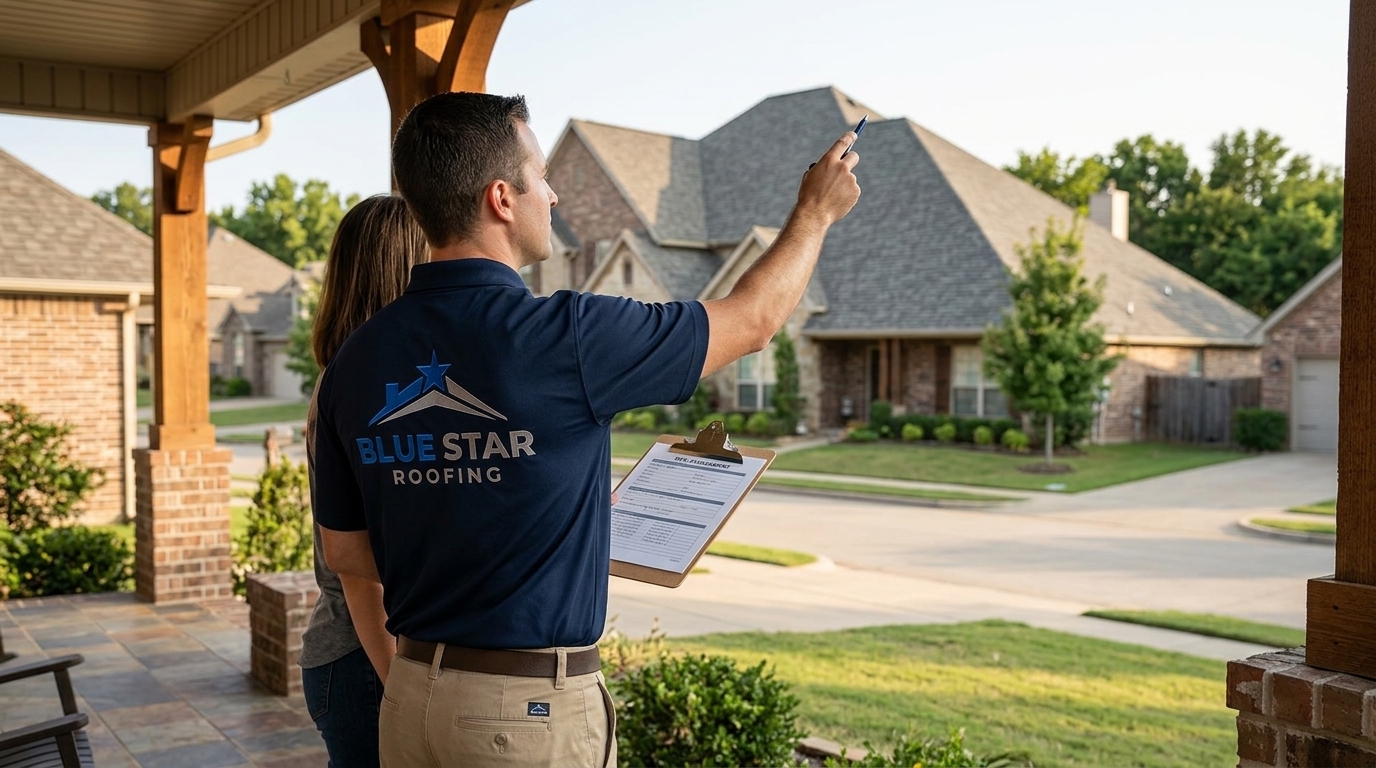
- Be present during the inspection. Don’t let the adjuster walk the roof alone.
- Have your contractor’s written estimate ready to share.
- Point out every area of damage you documented — don’t assume they’ll find it all.
- Ask the adjuster to explain any items they’re excluding and why.
- If the estimate feels too low, you have the right to request a re-inspection or hire a public adjuster.
Practical tip: Take your own photos during the adjuster’s visit. If there’s ever a dispute about what was inspected, your timestamped photos serve as a record of the roof’s condition on that specific day.
Choosing the Right Roofing Contractor for Your Anaheim Insurance Repair
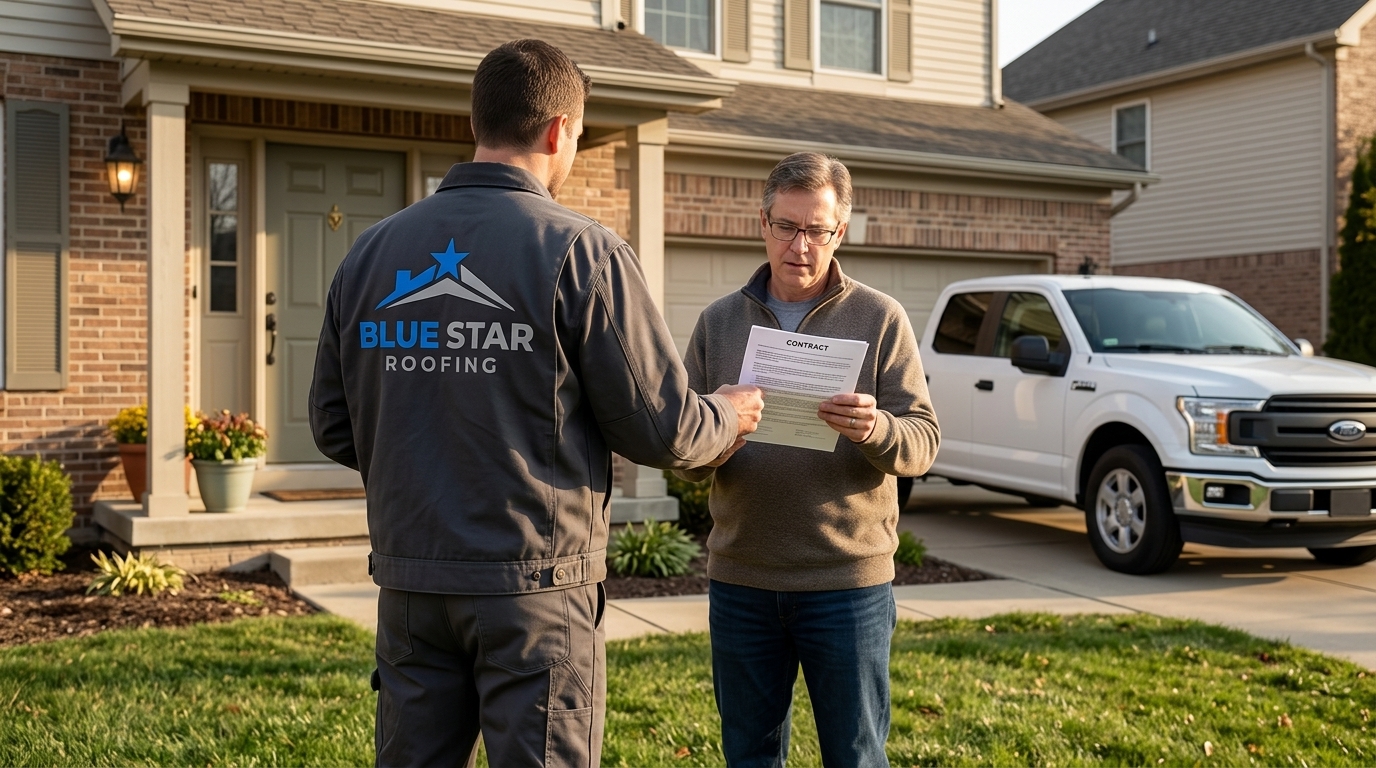
After your roof insurance Anaheim claim is approved, choosing the right contractor is just as important as filing correctly. Unfortunately, storm damage events attract unlicensed contractors who pressure homeowners into quick decisions.
What to look for in a legitimate roofing contractor:
- Licensed and insured in California (verify with the CSLB)
- Experience working directly with insurance companies on claim-related repairs
- Willing to provide a detailed written scope of work that matches your insurance estimate
- No pressure to sign anything on the spot
- Local reputation and verifiable reviews
Blue Star Roofing works directly with insurance companies to make sure the approved scope of work matches what your roof actually needs. The team handles the paperwork, communicates with adjusters, and keeps the project on schedule from approval to final inspection.
Practical tip: Never pay a contractor the full amount upfront. A standard payment structure is a deposit at contract signing, a progress payment when materials are delivered, and the final payment after the job passes inspection.
Common Reasons Roof Insurance Claims Get Denied in Anaheim
Even well-documented claims can be denied. Knowing the most common reasons helps you avoid the pitfalls before they cost you.
Top reasons for denial:
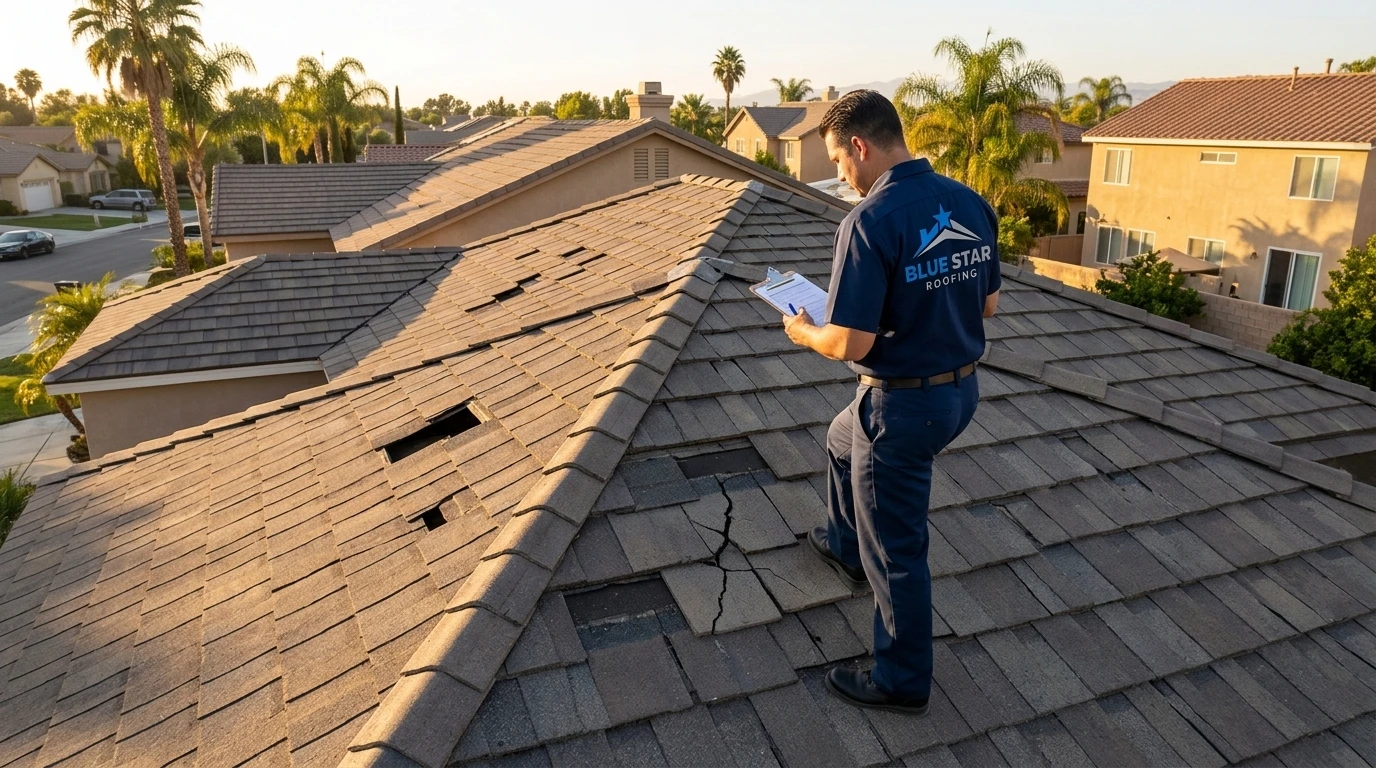
- Damage is attributed to wear and tear rather than a covered event
- The claim was filed too late after the damage occurred
- The homeowner made repairs before the adjuster could inspect
- The policy lapsed or had a coverage gap
- Insufficient documentation of the cause and extent of damage
If your roof insurance Anaheim claim is denied, don’t accept it as final. You have the right to appeal. Request a written explanation of the denial, gather additional evidence, and consider hiring a public adjuster or attorney who specializes in insurance disputes.
Practical tip: Keep a maintenance log for your roof — dated records of inspections, minor repairs, and cleaning. This proves the damage was sudden and not the result of neglect, which is one of the most common denial arguments insurers use.
Filing a roof insurance Anaheim claim doesn’t have to be a frustrating experience. When you document damage thoroughly, file promptly, and work with a contractor who understands the insurance process, you give yourself the best possible chance of a fair outcome. The steps in this guide are designed to keep you in control from the moment damage occurs to the day your roof is fully restored. Don’t let the process intimidate you — the right preparation makes all the difference.
If you’re dealing with roof damage and need a contractor who knows how to work with insurance companies, Blue Star Roofing is ready to help. Contact Blue Star Roofing for a free inspection and a written estimate you can take straight to your adjuster.
Frequently Asked Questions
How long does a roof insurance Anaheim claim typically take to process?
Most roof insurance Anaheim claims are processed within 2 to 6 weeks from the time you file, though complex cases or disputes can take longer. The timeline depends on how quickly an adjuster is assigned, how thorough your documentation is, and whether there are any coverage disputes. Staying organized and responsive speeds things up significantly.
Will filing a roof claim raise my homeowner’s insurance premium?
It depends on your insurer and your claims history. A single claim doesn’t always trigger a rate increase, but multiple claims within a short period often do. Talk to your insurance agent before filing to understand how a claim might affect your policy — especially if the damage is minor and close to your deductible amount.
What should I do if my roof insurance Anaheim claim is denied?
Start by requesting a written denial letter that explains the specific reason. Then gather additional documentation — contractor estimates, weather reports, and photos — to support an appeal. You can also hire a public adjuster to advocate on your behalf, or consult an insurance attorney if the denial seems unjustified.
Can I choose my own roofing contractor after my claim is approved?
Yes, in California you have the right to choose your own licensed contractor. Your insurance company may have a preferred vendor list, but you are not required to use it. Make sure the contractor you choose is willing to work within the approved insurance estimate and can document any supplemental work that may be needed.
Does my deductible affect how much I receive for a roof insurance Anaheim claim?
Yes, your deductible is subtracted from the total claim payout. For example, if your approved claim is $8,000 and your deductible is $1,500, you would receive $6,500. If you have an RCV policy, you may also receive a depreciation holdback that gets released once repairs are completed and verified.