How to Choose a Roofing Contractor You Can Actually Trust
Knowing how to choose roofing contractor candidates wisely is one of the most important decisions you will make as a homeowner. A roof replacement or major repair is a significant investment — and the wrong hire can lead to leaks, voided warranties, and thousands of dollars in follow-up repairs. This guide walks you through exactly what to look for so you can hire with confidence.
Why It Matters How You Choose a Roofing Contractor
Not all roofing companies operate at the same standard. Some are fully licensed, insured, and experienced. Others are seasonal crews that disappear after the job — or worse, after taking a deposit.
When you choose roofing contractor options carefully, you protect your home, your wallet, and your peace of mind. A qualified contractor will pull the right permits, use manufacturer-approved materials, and back their work with a written warranty.
The stakes are high. Roofing mistakes are not always visible right away — a poor installation can cause water damage inside your walls for months before you notice. Taking the time to vet your contractor upfront is always worth it.
Practical tip: Before you contact a single contractor, write down your project scope — whether it is a full replacement, a repair, or an inspection. Knowing what you need makes it easier to compare quotes accurately.
Verify Licenses, Insurance, and Credentials First
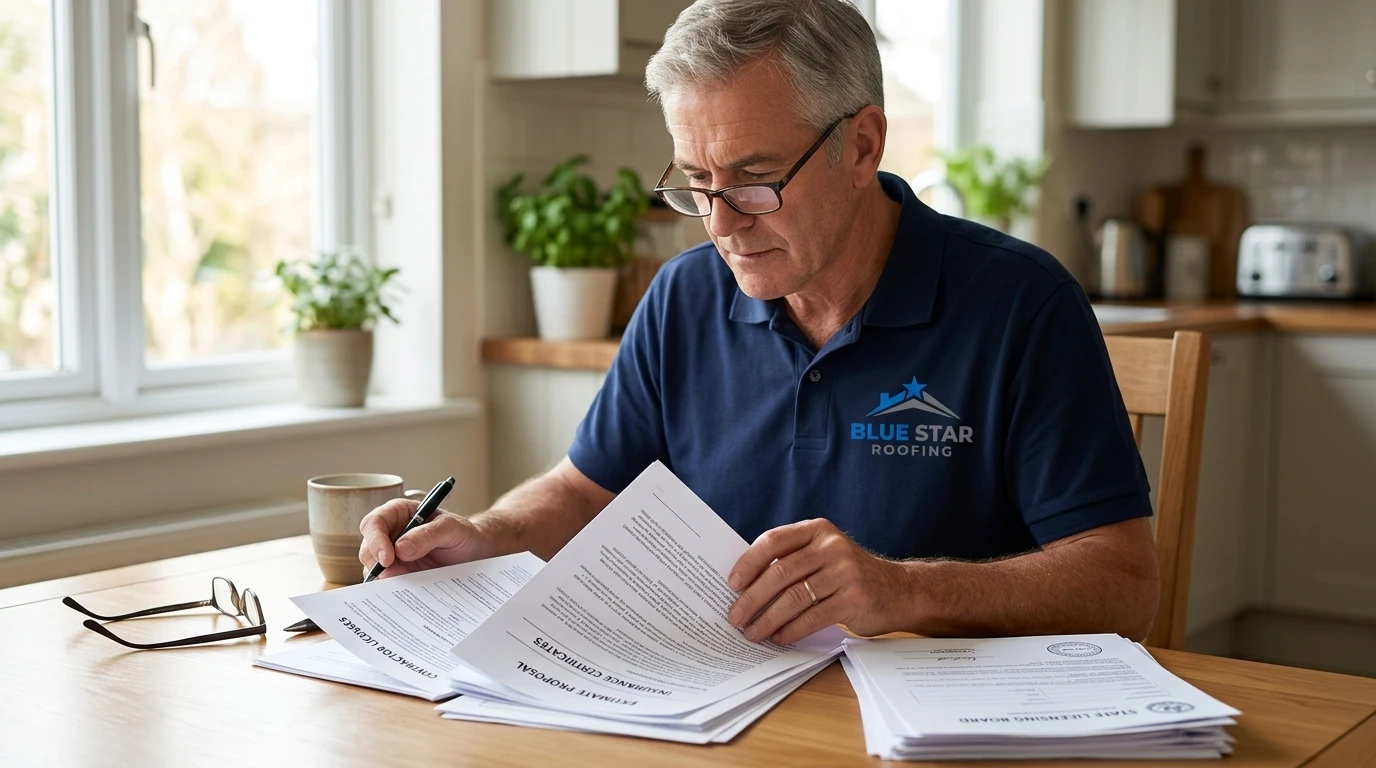
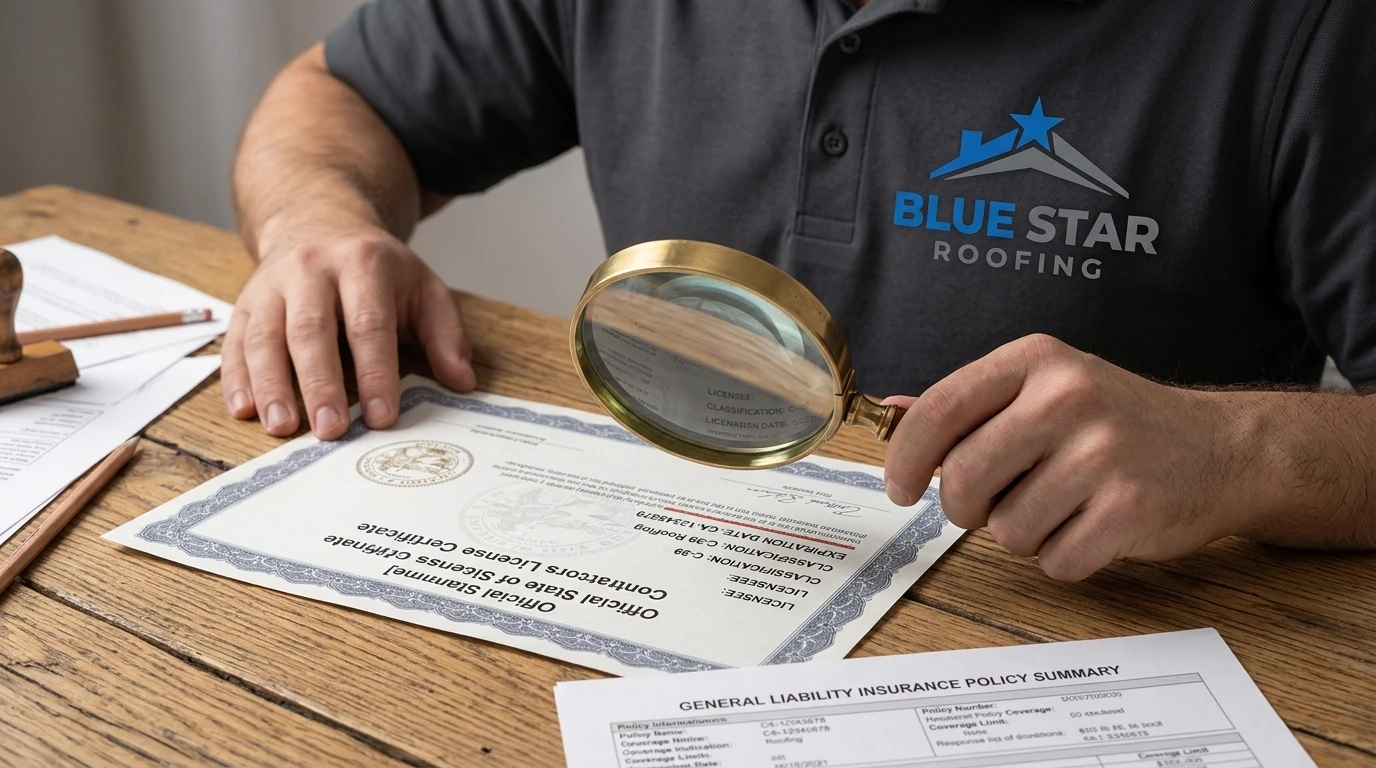
Before anything else, confirm that any contractor you are considering holds a valid state roofing license and carries both general liability insurance and workers’ compensation coverage.
This is non-negotiable. If a worker is injured on your property and the contractor lacks workers’ comp, you could be held financially responsible. If the contractor causes damage to your home and has no liability insurance, you have very little recourse.
Always ask for proof of both — not just a verbal confirmation. A reputable contractor will hand over their certificate of insurance without hesitation.
Practical tip: Call the insurance provider listed on the certificate directly to verify the policy is active. Certificates can be forged or outdated, and a quick phone call takes less than five minutes.
What a Valid Roofing License and Insurance Actually Cover
A state roofing license confirms the contractor has met minimum competency requirements set by your state’s licensing board. It also gives you a formal complaint channel if something goes wrong.
General liability insurance covers damage to your property caused by the contractor’s work or crew. Workers’ compensation covers medical costs if a worker is injured on your roof.
Together, these two documents are your primary financial protection. Never skip this step — even if a contractor comes highly recommended by a neighbor. Circumstances change, and policies lapse.
Use a Roofing Contractor Checklist to Compare Bids
Getting multiple bids is standard advice — but most homeowners do not know what to compare. Price alone is a poor guide. A roofing contractor checklist helps you evaluate each bid on the same criteria so you are making an apples-to-apples comparison.
Here is what every written estimate should include:
- The specific materials being used, including brand and product line
- Whether old shingles will be torn off or overlaid
- How the contractor handles decking repairs if damage is found
- The timeline for start and completion
- Payment schedule and deposit amount
- Warranty terms for both materials and labor
If a bid is missing any of these details, ask for them in writing before you proceed. Vague estimates are a red flag — they leave room for unexpected charges once work begins.
Practical tip: Ask each contractor to walk you through their bid line by line. How they explain their pricing tells you a lot about how they communicate throughout the project.
How to Hire a Roofer Without Getting Burned on Price
Understanding how to hire a roofer at a fair price means knowing what drives roofing costs. Material quality, roof pitch, square footage, and local labor rates all affect the final number.
The lowest bid is not always the best deal. Contractors who underbid often cut corners on underlayment, flashing, or ventilation — components that are invisible once the shingles go down but critical to long-term performance.
Aim for the middle range among your bids. If one estimate is dramatically lower than the others, ask the contractor to explain the difference in detail. A legitimate contractor will have a clear answer.
Check Reviews, References, and Local Reputation
Online reviews are a useful starting point, but they are not the whole picture. Look for patterns — consistent praise for communication and cleanup, or repeated complaints about delays and upsells.
Ask the contractor for two or three references from jobs completed in the past year. Call those homeowners and ask specific questions: Was the crew respectful of the property? Did the final cost match the estimate? Would you hire them again?
Local reputation matters too. A contractor who has been operating in your area for several years has a track record you can investigate. Newer companies are not automatically bad, but they carry more uncertainty.
Practical tip: Search the contractor’s business name alongside words like ‘complaint’ or ‘BBB’ to surface any unresolved disputes before you commit.
Understand the Contract Before You Sign Anything
A verbal agreement is not a contract. Every detail of your roofing project should be documented in a written contract before work begins.
The contract should specify the exact scope of work, materials, start and end dates, payment terms, and what happens if unexpected damage is discovered mid-project. It should also outline the warranty — both the manufacturer’s material warranty and the contractor’s workmanship warranty.
Read every line. If something is unclear, ask for clarification in writing. Do not let a contractor pressure you into signing quickly. Legitimate professionals expect homeowners to review contracts carefully.
Practical tip: Never pay more than 10–30% as a deposit upfront. A contractor who demands full payment before starting work is a serious warning sign.
Red Flags to Watch for When You Choose Roofing Contractor Candidates
Even with careful research, some warning signs only appear during the hiring process. Knowing what to watch for helps you walk away before you are locked in.
Common red flags include:
- Pressure to sign the same day or accept a ‘today only’ discount
- No physical business address or only a P.O. box
- Reluctance to provide proof of insurance or a license number
- Asking for full payment upfront
- No written warranty offered
- Showing up unsolicited after a storm — a common tactic used by storm chasers
Storm chasers are out-of-town crews that flood neighborhoods after severe weather. They often do substandard work and are gone before problems surface. Always choose roofing contractor options that are locally based and have a verifiable history in your community.
Practical tip: If a contractor knocks on your door after a storm, take their card but do your own research before calling back. Never make a same-day decision on a roofing project.
Questions to Ask Before You Hire a Roofer
Going into a contractor conversation with prepared questions puts you in control. Here are the most important ones to ask before you hire a roofer:
- How long have you been in business in this area?
- Are you licensed and insured? Can I see proof today?
- Will you pull the required permits for this job?
- Who will be on-site supervising the crew?
- Do you use subcontractors, and if so, are they also insured?
- What does your workmanship warranty cover and for how long?
- How do you handle unexpected damage found during the project?
The answers to these questions reveal a contractor’s professionalism, transparency, and experience. A contractor who hesitates or deflects on any of these is showing you something important.
Practical tip: Write your questions down and bring them to every estimate appointment. Comparing answers across contractors makes the right choice much clearer.
Taking the time to choose roofing contractor candidates carefully is not just about getting a good price — it is about protecting one of the largest investments you own. Verify credentials, use a detailed checklist, ask the right questions, and never let pressure rush your decision. The right contractor will welcome your scrutiny, not resist it. A quality roof starts with a quality hire, and that process begins with you doing your homework before anyone sets foot on your property.
Ready to work with a contractor you can trust? Blue Star Roofing brings licensed expertise, transparent pricing, and a commitment to quality craftsmanship to every project. Reach out to Blue Star Roofing today for a no-pressure estimate.
Frequently Asked Questions
How do I choose roofing contractor options without overpaying?
To choose roofing contractor candidates fairly, get at least three written bids and compare them using a detailed checklist — not just the bottom-line price. Look at the materials specified, the scope of work, and the warranty terms. The goal is value, not just the lowest number. A slightly higher bid from a licensed, insured contractor with strong references is almost always the better investment.
What credentials should I verify before I choose a roofing contractor?
Before you choose a roofing contractor, confirm they hold a valid state license and carry both general liability insurance and workers’ compensation. Ask for certificates of insurance and verify them directly with the provider. Also check for manufacturer certifications, which indicate the contractor has been trained to install specific products correctly.
What is a roofing contractor checklist and why do I need one?
A roofing contractor checklist is a structured list of criteria you use to evaluate and compare bids from different contractors. It typically covers licensing, insurance, materials, warranty terms, payment schedule, and references. Using a checklist ensures you are comparing contractors on the same factors rather than making a decision based on price alone.
How do I know how to hire a roofer who will honor their warranty?
When figuring out how to hire a roofer who stands behind their work, look for contractors who offer a written workmanship warranty of at least two years in addition to the manufacturer’s material warranty. Ask specifically what the warranty covers and how to file a claim. A contractor who is vague about warranty terms is a red flag.
Is it safe to hire a roofer who shows up after a storm?
It can be risky. Contractors who canvass neighborhoods after storms are often out-of-town crews with no local accountability. Before hiring anyone who approaches you this way, verify their license, check their reviews, and confirm they have a local business address. Taking a few extra days to vet them properly is always worth it.